

From relaxing beside crocodiles to sharing snacks with monkeys and birds, the capybara has become an internet icon of peace and calm.
But is this friendliness as real as it seems? Are capybaras truly kind and social by nature, or is their calm behavior a clever survival strategy shaped by evolution?
In this article, we’ll look deeper into what makes capybaras so tolerant and easygoing.
Defining Friendliness: What It Means for a Capybara
Beyond Human Affection: Tolerance vs. True Friendliness
Capybaras are often called friendly, but in reality, their behavior is more about tolerance than true affection. The calm nature makes it easy for them to get along with everyone in their community.
However this calm behaviour does not come from emotionally like other pets.
So, when a capybara doesn’t react strongly to any aggression shown toward them. This means that they tolerate and like to be easy going with animals. This friendly nature makes them good pets.
Evolutionary and Biological Roots of Their Calm Temperament
Semi-Aquatic Lifestyle and Thermoregulation
The scientific reason behind their calm is their need to share the water bodies with the animals that live near them.
As they have to share the sanctuaries with the other animals they show a calm nature and behaviour towards them.
Living near the water bodies makes it easy to regulate their temperature during the warm climate.
Expert Observation: Capybaras need constant access to water not only to stay cool but also to socialize. Bathing, swimming, and resting together in water are key parts of their bonding behavior and group life.
Herbivorous Diet and Lack of Predatory Instinct
Capybaras are herbivores, meaning they eat mostly grasses and aquatic plants. Since they don’t need to hunt or defend kills, they have no reason to act aggressively.
In contrast, big cats or wolves must compete for food and territory, which encourages more aggressive behaviors. Capybara’s plant based diet frees them from that pressure, allowing for a gentler, more cooperative lifestyle.
The Brain, Hormones, and Social Bonds
Capybaras are highly social mammals, and their brains and hormones support this. Studies of social animals suggest that hormones like oxytocin (often called the “bonding hormone”) play a role in forming peaceful relationships and reducing aggression.
The Nucleus of Capybara Life: Understanding Their Social Structure
Herd Dynamics: Safety in Numbers
For capybaras, living in a group is not a choice, it’s a way of survival. A typical herd can include 10 to 20 individuals, sometimes even more during the wet season.
Living together helps them spot predators faster, protect the young, and find food more safely. Teamwork in their survival makes life easier and safer for everyone.
Expert Tip: Capybaras have a strong herd instinct. Keeping one alone can cause anxiety and distress. They thrive best in small groups or pairs where they can groom, communicate, and rest together.
Communication Beyond Cuddles: Subtle Cues
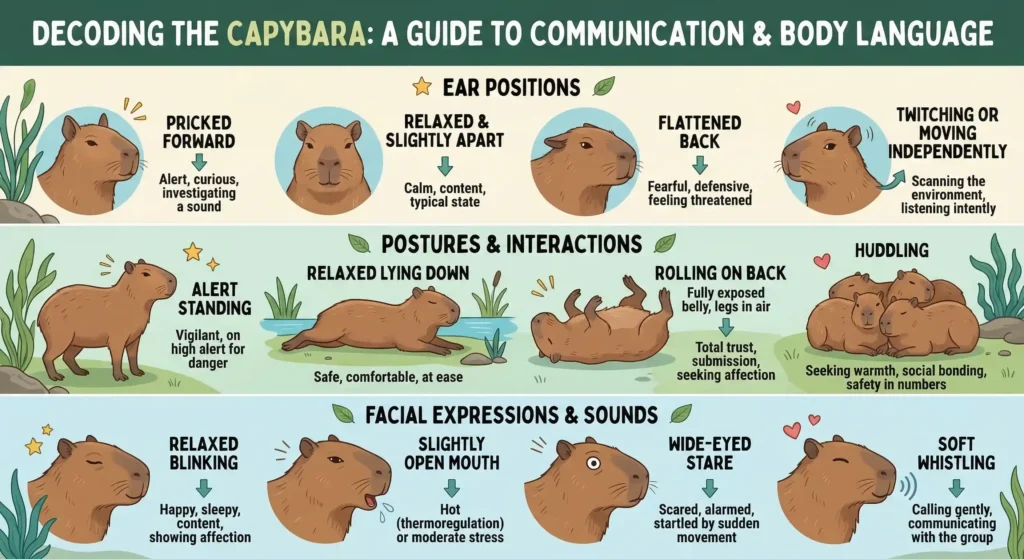
Capybaras may look quiet, but they communicate all the time through sounds, body language, and subtle movements. Understanding these signals helps humans and other animals interact with them more respectfully.
Here’s a quick guide to their main communication cues
| Signal Type | Behavior | Meaning |
|---|---|---|
|
Ears
|
Flattened
|
Stress, warning, or alertness
|
|
|
Relaxed and upright
|
Comfort and calmness
|
|
Vocalizations
|
Teeth chattering
|
Warning or irritation
|
|
|
Low purring or rumbling
|
Contentment and social comfort
|
|
|
Sharp bark
|
Alarm or predator alert
|
|
Posture
|
Stiff and still
|
Tension or readiness to flee
|
|
|
Relaxed, lying down
|
Comfort and safety
|
These subtle cues will help you read their behaviours. Sometimes their silence is not a happy signal and not also a sad one. You can understand behaviour by understanding them
Social Grooming and Bonding Rituals
Capybaras strengthen their relationships through social grooming. They gently nibble or groom each other’s fur, removing dirt and parasites while showing trust and affection.
This behavior does more than just keep them clean; it helps to build social bonds, reduce tension. Grooming also releases calming hormones that support group harmony.
The Interspecies Phenomenon: Why Capybaras Befriend Everyone
Shared Habitats and Resource Coexistence
Capybaras are often seen relaxing beside turtles, birds, monkeys, and even crocodiles. This peaceful coexistence happens because of how they live and what they eat. As large herbivores, capybaras feed mainly on grasses and aquatic plants, so they don’t compete with meat eating or insect eating animals for food.
Documented Interspecies Friendships: Case Studies
During our visit to wildlife reserves we have observed the calm nature of the Capybaras who truly live in harmony with many kinds of animals.
On one warm afternoon near a marshland in northern Brazil, we watched a small group of capybaras lounging by the water, their bodies half-submerged to stay cool. A flock of blackbirds came across this peaceful creature and landed on their backs to eat insects from the land. These creatures easily ate their food and capybaras didn’t even flinch to let them do their work.
These and many other examples of such calm behaviour of the capybaras have made the statements.
Fact vs. Fiction: Debunking Capybara Friendliness Myths
Myth 1: Capybaras Are Ideal House Pets
Many people believe that capybaras make great household companions because of their calm and friendly nature. In reality, this is a misconception. While they are gentle animals, they are not suited to life as typical pets.
Fact Check:
Capybaras are wild, semi aquatic herd animals, not domesticated species. Their behavior, space needs, and lifestyle requirements and as a human we cannot fulfill their needs.
Expert Tip:
If you’re drawn to capybaras, support them ethically by visiting licensed wildlife sanctuaries or contributing to habitat conservation programs. For anyone seriously considering ownership, conduct thorough research on legal requirements, habitat design, and ongoing care commitments before taking any action.
Myth 2: Always Safe to Approach Wild Capybaras
Many people assume that wild capybaras are harmless because they appear calm and approachable in photos or videos. However, this is not always safe or true. Capybaras are wild animals, and like any wild species, they can react defensively if they feel threatened or cornered.
Warning Signs to Watch For:
- Flattened ears: Sign of stress or alertness.
- Teeth chattering: Warning or irritation.
Stiff body posture: Readiness to flee or defend.
Expert Tip:
Never approach or try to handle a wild capybara casually. Always keep a safe distance and observe quietly. Respecting their space keeps both humans and animals safe. As if they feel threatened they can attack the visitor with their teeth.
Myth 3: They Never Bite or Defend Themselves
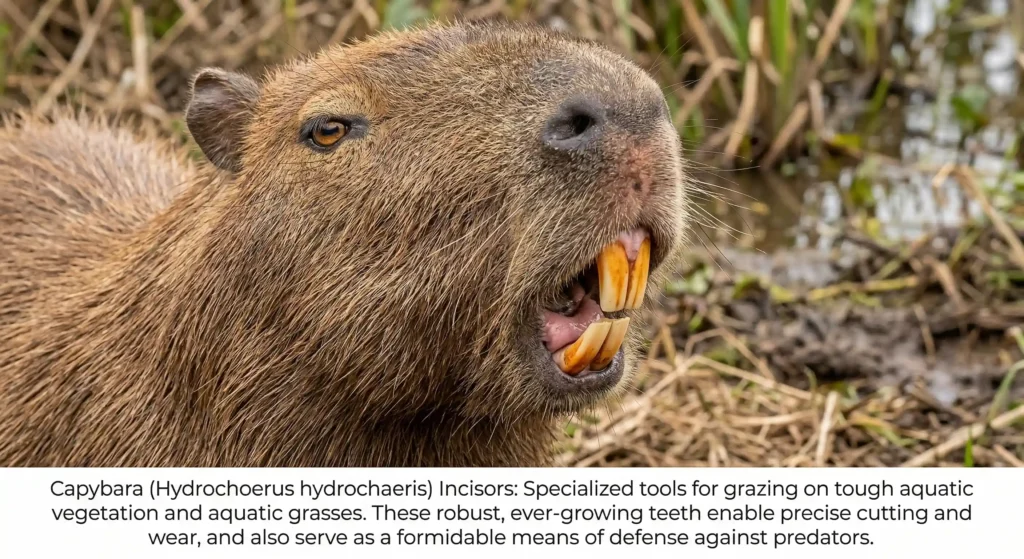
Capybaras may look gentle, but they are fully capable of defending themselves. They have sharp, strong front teeth used for cutting tough plants; however, the same teeth can deliver a serious bite if the animal feels threatened.
Responsible Interaction: Ethics of Engaging with Capybaras
Captive vs. Wild Behavior: A Crucial Distinction
Capybaras you meet in petting zoos or sanctuaries often behave very differently from wild ones. Captive or habituated capybaras are used to being around people, so they may allow gentle contact or feeding. However, wild capybaras are cautious and prefer to keep their distance.
Legal and Ethical Considerations for Pet Ownership
Capybara requires far more than affectionate demands for space, they need large outdoor habitats, constant access to water, and the companionship of other capybaras.
Legally, capybara ownership is restricted or banned in many regions, requiring special permits or wildlife-facility licenses.
Before considering ownership, consult veterinary experts who specialize in exotic species to understand their health, welfare, and behavioral needs
Summary Table: Key Factors Contributing to Capybara’s Social Nature
| Factor | Explanation | Impact on Behavior |
|---|---|---|
|
Herd Instinct |
Capybaras are highly social animals that thrive in groups.
|
Cooperation within the group; as solitary capybaras are often stressed.
|
|
Semi-Aquatic Lifestyle
|
Constant need for water for thermoregulation, leading to shared aquatic environments.
|
Encourages peaceful coexistence with diverse species around water sources.
|
|
Herbivorous Diet
|
Their diet of grasses and aquatic plants means no competition with other species for prey.
|
Reduces aggression and territorial disputes.
|
|
Evolutionary Adaptations
|
Historical predator pressures favored vigilance and flight over fight.
|
Leads to a generally calm and non confrontational behaviour leading to survival strategy.
|
|
Communication Style
|
Reliance on subtle body language and vocalizations rather than overt aggression.
|
Facilitates peaceful interactions and clear (though nuanced) signaling within and outside their species.
|
|
Lack of Territoriality
|
Unlike many mammals, capybaras do not exhibit strong territorial behaviors for land.
|
Allows for shared living spaces with other animals without conflict over boundaries.
|
Conclusion: Appreciating the Capybara’s True Nature
A Complex Tapestry of Biology and Behavior
The capybara’s famous friendliness isn’t just a charming personality trait, it is the result of evolution, biology, and social adaptation working together and is not about seeking affection, but about maintaining peace and safety within their herds and habitats.
Even though capybaras appear gentle and approachable, they are still wild animals, guided by instinct and environmental needs. They deserve our respect and protection, not our attempts to domesticate or humanize them
Frequently Asked Questions
Are capybaras nature-friendly animals?
Yes, capybaras are considered very nature-friendly because they are calm herbivores that live peacefully in ecosystems without harming other animals.
Why are capybaras so friendly?
Capybaras are naturally social animals that live in groups, which makes them gentle, cooperative, and less aggressive toward other species
Do capybaras harm other animals?
No, capybaras do not hunt or attack other animals. They are herbivores and only eat plants like grass and aquatic vegetation.
Can capybaras live peacefully with other animals?
Yes, capybaras are known to peacefully coexist with many animals, including birds, turtles, and even domestic pets in some environments.
Why do capybaras behave so calmly?
Their calm behavior comes from their survival strategy—being peaceful helps them avoid conflict and stay safe in groups.
Are capybaras dangerous to humans?
No, capybaras are not dangerous to humans. They are gentle and usually avoid confrontation unless they feel threatened.
Do capybaras show social behavior in nature?
Yes, they are highly social and live in groups, often grooming, resting, and moving together, which strengthens their peaceful nature.
Why are capybaras called the most friendly animals?
They are often called friendly because they show calm behavior, tolerate other species, and rarely show aggression, even in mixed environments.
I’ve been browsing online more than 2 hours today, yet I never
found any interesting article like yours. It’s pretty worth
enough for me. In my opinion, if all site owners and bloggers made good
content as you did, the web will be a lot more useful than ever before.
Attractive section of content. I just stumbled upon your site
and in accession capital to assert that I acquire
in fact enjoyed account your blog posts. Anyway I will be
subscribing to your augment and even I achievement you access consistently quickly.
What’s up, this weekend is good in favor of me, since this
moment i am reading this great informative article here
at my home.
Looking forward to share the information about capybara