A large capybara stuffed animal quickly becomes a beloved cuddle companion, a room decor centerpiece, and a magnet for dust, spills, and everyday grime. Knowing how to wash a large capybara stuffed animal correctly keeps it fluffy, hygienic, and looking like new without squishing its shape or ruining delicate fabric. Whether you own a jumbo floor pillow version or a weighted plush, the cleaning method matters.
Before you toss your oversized friend into any water, check our guide to the best capybara stuffed animals so you can identify the exact materials and construction. This tutorial walks you through prepping, hand washing, machine washing, drying, spot cleaning, and common mistakes, all while protecting your plush for years of snuggles.
Preparing Your Jumbo Capybara Plush for Cleaning

Cute Capybara Plush Soft Capybara Plushie Pillow 12 inch
Check PriceCheck the Care Label First
Always read the sewn in tag, even on giant capybara plushies. It reveals whether the outer shell is polyester, cotton blend, or a specialty fiber like minky, and if the stuffing is traditional polyfill, memory foam clusters, or weighted beads. The label may say surface wash only, hand wash cold, or machine wash gentle. Following that advice prevents irreversible damage. If the tag is missing, default to the gentlest hand wash approach we share below.
Remove All Accessories and Vacuum Loose Dirt
Large capybara stuffed animals often come with removable outfits, tiny turtle backpacks, or citrus slice accessories. Detach every piece. Next, use a vacuum with an upholstery brush attachment to gently lift surface dust, pet hair, and crumbs from the entire plush, paying extra attention to creases around the legs and ears. This pre vacuuming keeps wash water cleaner and prevents dirt from embedding deeper into the fibers.
Hand Washing Your Oversized Capybara Friend

PEACH CAT Capybara Plush 7 Inch Brown
Check PriceHand washing is the safest choice for oversized plush, especially those with glued on details, delicate airbrushed shading, or heavily sculpted faces. It lets you control water temperature and agitation.
Spot Test for Colorfastness
Dampen a hidden area, such as the inner seam of a back leg, with a white cloth dipped in cool water and a drop of mild detergent. If color transfers to the cloth, avoid full submersion and use only dry foam cleaning methods. Most high quality capybara plushies are colorfast, but hand painted details can bleed.
Fill a Basin with Cool Water and Gentle Soap
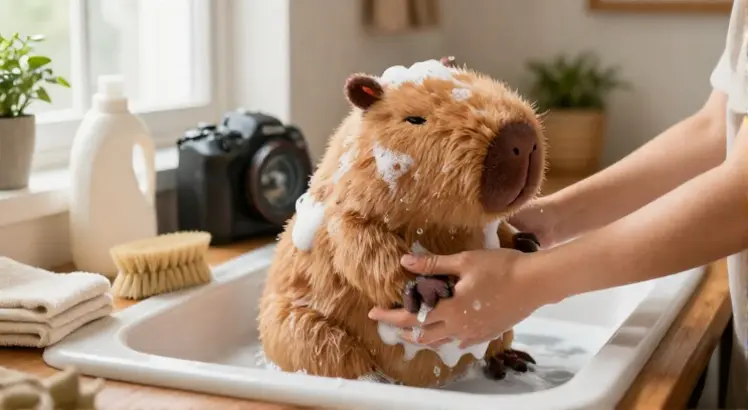
Use a large bathtub, a plastic storage tote, or a deep laundry sink. Dissolve a teaspoon of wool safe or delicate laundry liquid (no bleach, no fabric softener) in cool water. Submerge the capybara plush and gently squeeze the stuffing to let soap water penetrate. Never twist or wring; instead, press and release for about five minutes. For a similar hands on approach with backpack style plushies, see our detailed post on how to wash a capybara turtle backpack plush.
Rinse Until Water Runs Clear
Drain the soapy water and refill with cool clean water. Press the plush repeatedly to release suds. You may need three or four full rinses for an extra large capybara given the dense filling. Leftover soap attracts dirt and can make the fur feel crunchy after drying, so thorough rinsing is essential.
Machine Washing a Sturdy Large Capybara Stuffed Animal

Aurora Mini Flopsie 9 Inch Charlie Capybara
Check PriceSome large capybara stuffed animals are built tough enough for a front loading washer, but only if they meet specific criteria. Always verify the care label permits machine washing before you proceed.
When Machine Washing Is Safe
Plushies with entirely sewn features, no glued eyes, no plastic nose capsules, no internal weighted pouches, and no electronic voice boxes can usually survive a gentle cycle. If your capybara has a battery pack or mechanical heart, hand wash only. According to this guide on washing stuffed animals, placing the toy inside a mesh laundry bag or a zippered pillowcase is crucial to protect the fabric and limbs.
Select the Right Washer Settings
Use cold water, the delicate or hand wash cycle, and the slowest spin speed. Add a small amount of mild detergent. Skip fabric softener entirely because it coats the fur and reduces the plush’s signature fluffy texture. If your washer has an extra rinse option, turn it on to flush out all soap residue.
Use Protective Layers
Stuffing the capybara into a queen size mesh laundry bag or tying it inside a cotton pillowcase with a knot secures the shape. For extra large models that barely fit the drum, balance the load with two or three clean towels to minimize thumping. Never wash a capybara plush with heavy items like jeans.
Drying a Giant Capybara Plushie Safely

CHDBLOCK Capybara Plush Toy with Turtle Backpack
Check PriceDrying incorrectly is the number one reason large stuffed animals lose their shape or develop a musty smell. Patience and air flow are your best tools.
Towel Blot Before Air Drying
Lay the freshly washed capybara on a thick, clean towel. Roll it up gently, pressing to absorb as much water as possible. Repeat with dry towels two or three times. Do not twist. After blotting, reshape the plush, fluff the ears, smooth the snout, and ensure the limbs are positioned naturally.
Air Dry in a Well Ventilated Spot
Place the capybara on a drying rack or a towel lined floor near a fan or an open window. Turn it every few hours to prevent moisture pooling inside the stuffing. Large plushies can take 24 to 48 hours to dry completely. You can speed the process by pointing a fan directly at the damp areas but never use a hair dryer on high heat, as it singes synthetic fur.
Tumble Dry on No Heat if Label Allows
If the tag says tumble dry low or air fluff, place the capybara inside a pillowcase and run the dryer on the air only or no heat setting. Add a couple of wool dryer balls to help fluff the fur. Check every 15 minutes. Remove as soon as it feels barely damp and finish with air drying. Heat can melt minky fibers and loosen glued joints.
Spot Cleaning for Quick Refresh Between Full Washes

SQEQE Weighted Capybara Plush
Check PriceFor small stains, dribbles, or daily dust, a full wash is not always necessary. Spot cleaning extends the time between deep cleans and keeps the capybara fresh.
Homemade Gentle Stain Remover
Mix one cup of cool water with a teaspoon of gentle laundry detergent and a teaspoon of white vinegar. Dip a microfiber cloth in the solution, wring it almost dry, and dab the stained area. Work from the outside of the stain inward to avoid spreading it. Blot with a separate damp cloth of plain water afterward, then pat dry.
Deodorizing with Baking Soda
Sprinkle baking soda generously over the entire plush, especially the underbelly region. Let it sit for at least two hours (overnight for stubborn odors), then vacuum it off thoroughly using the upholstery tool. This method absorbs musty smells without risking water damage to weighted beads or internal sound boxes.
Freshening Fur with a Fabric Spritz
Fill a spray bottle with water and a splash of unscented fabric refresher or a few drops of essential oil safe for pets. Lightly mist the plush from a distance, then brush the fur with a soft bristle brush to restore its plush look. Always patch test on a hidden spot first.
Mistakes to Avoid When Washing Large Plush

SQEQE Weighted Capybara with Turtle Backpack
Check PriceEven careful owners can accidentally ruin a giant capybara plush by overlooking a few simple rules. Steer clear of these frequent errors.
- Skipping the bag or pillowcase. Unprotected machine washing can rip seams, scratch eyes, and tangle limbs. Always enclose the plush.
- Using hot water. Hot water breaks down glue, melts certain fibers, and can shrink polyester plush. Stick to cool or lukewarm.
- Adding fabric softener. It leaves a waxy residue that attracts more dirt and flattens the fluffy texture you love.
- Wringing or aggressive spinning. Twisting forces stuffing into clumps. Press water out gently instead, and always choose the lowest spin speed.
- Drying in direct sunlight for hours. Intense UV rays can fade colors and make fabrics brittle. Air dry in shade with good air circulation.
- Ignoring internal components. If your capybara has a music box, heating pad, or weighted insert, never submerge it. Spot clean only.
By dodging these pitfalls, you prolong the life of your capybara and keep its comforting hug factor intact.
Frequently Asked Questions About Washing Large Capybara Stuffed Animals

Aurora Miyoni 10 Inch Capybara Realistic Stuffed Animal
Check PriceCan I wash my capybara plush if it has a weighted bottom?
Weighted plushies usually contain glass or plastic beads sewn into a separate inner pouch. Full submersion risks moisture trapped inside the bead pouch, leading to mildew. Spot clean the surface and deodorize with baking soda. If you must wet the whole plush, use a damp cloth with gentle soap, carefully avoiding the weighted section as much as possible, then air dry quickly with a fan pointed at the belly.
How often should I clean a large capybara stuffed animal?
For display plushies, a thorough clean every three to four months plus weekly vacuuming is enough. Bedtime cuddlers that travel with a child may need a wash every four to six weeks, or whenever they look dingy or smell stale. Spot clean spills immediately to prevent staining.
My capybara plush got flat after washing. How do I fix it?
Gently massage and pull apart any clumped stuffing through the fabric. For extreme flatness, you can open a small seam on the back, use your fingers to break up and refluff the polyester fiberfill, then ladder stitch the seam closed. Brushing the fur with a wire pet slicker brush after drying also brings back the fluffy texture.
Is it safe to use a carpet cleaner or upholstery machine on a giant plush?
Yes, a handheld upholstery cleaner that sprays and extracts water can work well for deep but localized cleaning. Use a mild solution without optical brighteners, test on a hidden spot, and avoid over saturating the stuffing. Extract as much moisture as possible, then air dry with a fan.
Does the turtle backpack on my capybara need special care?
Most turtle backpack accessories are made of polyester fabric and are safe to hand wash along with the capybara. If the turtle is attached with velcro, remove it before washing. For permanently sewn turtle details, follow the same careful hand wash method and pay extra attention to drying that area thoroughly. Check the seams around the turtle to ensure no water gets trapped inside.
Conclusion:
Caring for a oversized capybara plush doesn’t have to be intimidating. With the right preparation, gentle products, and a little patience, your squishy companion will stay clean, soft, and ready for countless more hugs. Whether you hand wash, use a delicate machine cycle, or rely on smart spot cleaning, the key is always to respect the material and avoid heat and harsh agitation. Now that you know how to wash a large capybara stuffed animal the proper way, you can keep that adorable giant rodent looking and smelling wonderful for years.