
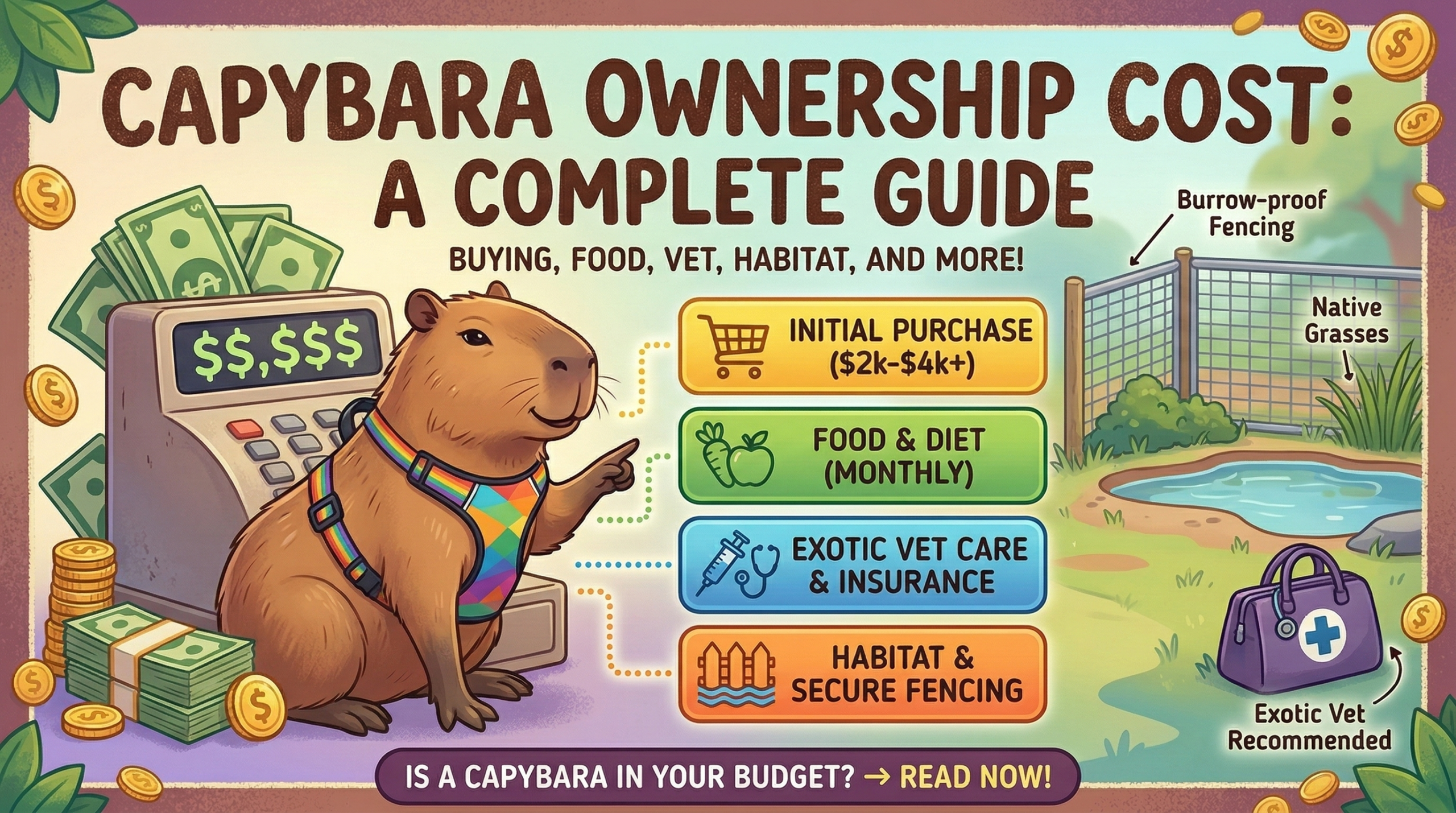
This guide cuts through the confusion, offering a transparent, comprehensive breakdown of every potential cost you need to know. We’ll unveil the hidden expenses and long-term financial reality.
By the end of this guide, you’ll gain a realistic understanding of the financial responsibilities involved, empowering you to make a truly informed and ethical decision about whether a capybara is the right pet for your budget and lifestyle.
The Initial Investment: Capybara Purchase Cost
Understanding the upfront cost is just the first step. The average cost of owning the largest rodent in the world is between 1000$ to 3000$. The younger capybara could be more expensive than the older one. Baby capybara costs around 2000$ – 4000$ depending upon the breed. Area you live in and the legal compliance.
Owning a capybara can be a unique experience. This section details the average price range for a capybara and the various factors that influence it.
- Age and Temperament: Younger, well-socialized capybaras may command higher prices due to their longer potential lifespan and ease of training. It helps potential owners to train them easily and build a strong bond.
- Breeder Reputation and Ethics: Reputable breeders who prioritize animal welfare, health screening, and proper socialization often have higher prices but offer healthier, better-adjusted animals.
- Geographic Location: Prices can vary significantly based on supply and demand in different regions or countries where capybaras are legal.
- Lineage and Health Guarantees: Capybaras with documented healthy lineages or specific colorations might be more expensive. Health guarantees from breeders can also influence price
- Transportation Costs: If purchasing from out of state, factor in shipping or specialized pet transport fees.
Initial Purchase Cost Factors
| Factor | Cost Impact | Notes |
|---|---|---|
|
Capybara Price
|
$1,000 – $3,000+ (varies widely)
|
Influenced by breeder, age, sex, location, and demand. Some rare colorations or specific lineages might be higher.
|
|
Transportation/Shipping |
$200 – $800+ |
Depends on distance, mode of transport (air cargo, ground transport), and carrier. |
|
Initial Vet Check
|
$50 – $200
|
Essential for new pets to ensure health, deworming, and initial vaccinations. May include fecal tests. |
|
Starter Supplies |
$100 – $300
|
Includes initial bags of specialized pellets, hay, water bowls, basic shelter for transport, and enrichment toys.
|
|
Total Initial Outlay
|
$1,350 – $4,300+ (estimated, before enclosure)
|
This is a rough estimate. The enclosure setup costs (detailed later) will add significantly to the overall initial investment. |
“Expert Tip: Consider adopting from a reputable rescue organization. While initial costs might be lower, be prepared for potential pre-existing health issues that could require immediate veterinary attention.”
The Ongoing Commitment: Daily & Monthly Expenses
Beyond the initial purchase, the daily and monthly costs of capybara care form the bulk of their lifetime expenses and it’s very important to calculate the budget so you take better care of these human friend animals.
Ongoing Food & Diet Costs
Pets like capybara have specific diet plans and need some good budget to take care of food supplies.
Essential Diet Components & Estimated Quantities:
Capybara is classified as herbivorous grazer. As a natural diet they eat leaves, grass and herbs. Moreover, high fiber pellets are more helpful to them.
Expert tips: Divide the “Feed quantity per day” over at least two feeding moments per day.
Feed quantity per day
2% of body weight
Sample percentage calculation
If an animal weighs 60 kg and eats 2% of its body weight, it will get
60 x 0.02 = 1.2 kg feed in total per day
- Fresh Produce: A variety of safe, leafy greens, vegetables, and small amounts of fruit as treats. Examples: romaine lettuce, carrots, bell peppers, apples (in moderation).
- Vitamin Supplements: Especially Vitamin C, which capybaras cannot synthesize on their own.
- Timothy Hay: Unlimited access is crucial for dental health and digestion. Estimate 1-2 large bales per month per capybara
Reducing Food Costs:
- Bulk Purchasing: Buying hay and pellets from agricultural suppliers can significantly reduce costs compared to pet stores.
- Growing Your Own: For some produce, home gardening can be an option if space permits.
“Expert Tip: Bulk purchase capybara-appropriate hay and specialized pellets from agricultural suppliers to reduce ongoing food expenses.”
Veterinary Care Expenses: Budgeting for Health
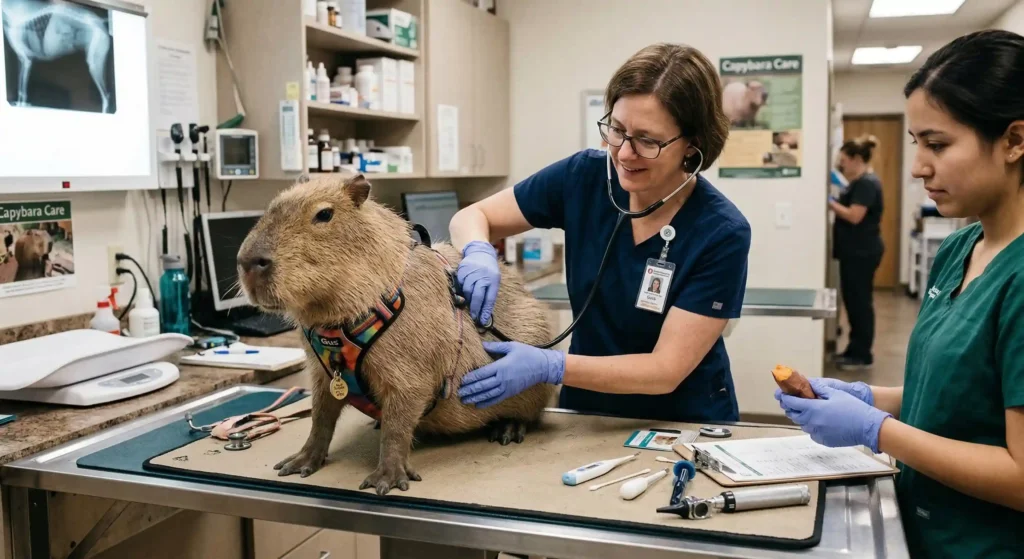
Finding and affording an exotic animal veterinarian is paramount for capybara well-being.
Routine Care & Preventative Measures:
- Annual check-ups, including physical exams and weight monitoring.
- Deworming protocols based on fecal tests.
- Nail trims and dental checks.
Emergency Fund & Unexpected Costs:
Capybaras are prone to certain health issues (e.g., dental problems, skin issues, respiratory infections). Moreover, emergency visits, diagnostics (X-rays, blood tests), and specialized treatments can be very expensive.
Expert Tip: Factor in an emergency fund specifically for exotic pet veterinary care, as specialized vets can be costly and emergencies unpredictable.
“Expert Guide: Factor in an emergency fund specifically for exotic pet veterinary care, as specialized vets can be costly and emergencies unpredictable.”
Common Veterinary Services & Estimated Costs
| Service | Estimated Cost Range | Frequency | ||
|---|---|---|---|---|
|
Routine Annual Check-up
|
$150 – $300
|
Annually
|
||
|
Fecal Exam / Deworming
|
$50 – $100 |
Annually or as recommended
|
||
|
Nail Trims
|
$20 – $50
|
Monthly/Bi-monthly (can be DIY with training)
|
||
|
Emergency Visit (initial)
|
$200 – $500+
|
As needed
|
||
|
Diagnostics (X-rays, Bloodwork)
|
$150 – $600+
|
As needed
|
||
|
Prescription Medications
|
$30 – $150+
|
As needed
|
||
|
|
Annual |
Note : Emphasize that these are general estimates and actual costs can vary wildly based on location, specific veterinary practice, and the capybara’s health status. Stress the importance of discussing costs with their chosen vet.
Housing & Enclosure Setup Costs: Building a Capybara Haven
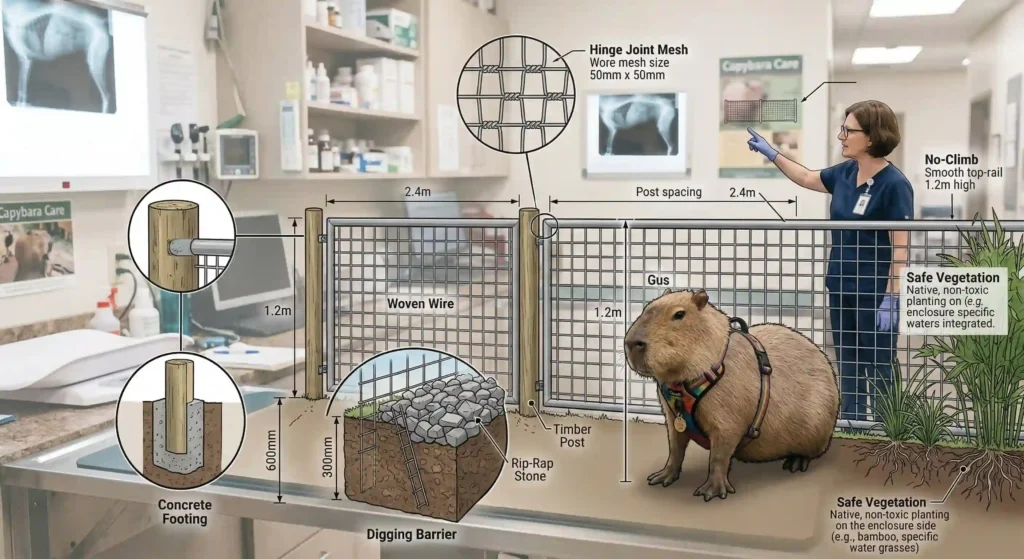
Creating a safe, stimulating, and appropriate habitat is one of the most significant initial investments. The initial cost of building a house for capybara is around 3000$- 10000$. An ideal home including a waterpool in front of the house as capybara is a semi aquatic animal.
Secure Fencing: Essential for Safety:
Requirements for height, material (strong wire mesh, solid fencing), and depth to prevent digging out.Cost variations based on size of enclosure and material.
The Importance of a Water Source (Pool):
Capybaras are semi-aquatic and need a large, clean pool for swimming, cooling, and defecation.They rely on water for thermoregulation, protection from predators, and as a source of food.
Available Options: kiddie pools (temporary/small), preformed ponds, or custom-built concrete pools.
- Filtration systems and regular cleaning are ongoing considerations.
Shelter & Substrate:
Capybaras are easily overheated due to long hair and big bodies. Walking on a hot floor can easily overheat them and cause dehydration. So it’s very important to have a shelter above the pool and home. This shelter not only protects them from sunlight but also from sand .
Expert Tip: Invest in durable, secure fencing and a proper water source (pool) from the outset to avoid costly replacements or escapes.
Enrichment, Supplies & Miscellaneous Costs
Owning a capybara involves more than just food and housing. To keep them happy, healthy, and properly cared for, you’ll need to budget for enrichment tools, grooming supplies, and occasional services. These costs, while sometimes overlooked, are essential for a capybara’s overall well-being.
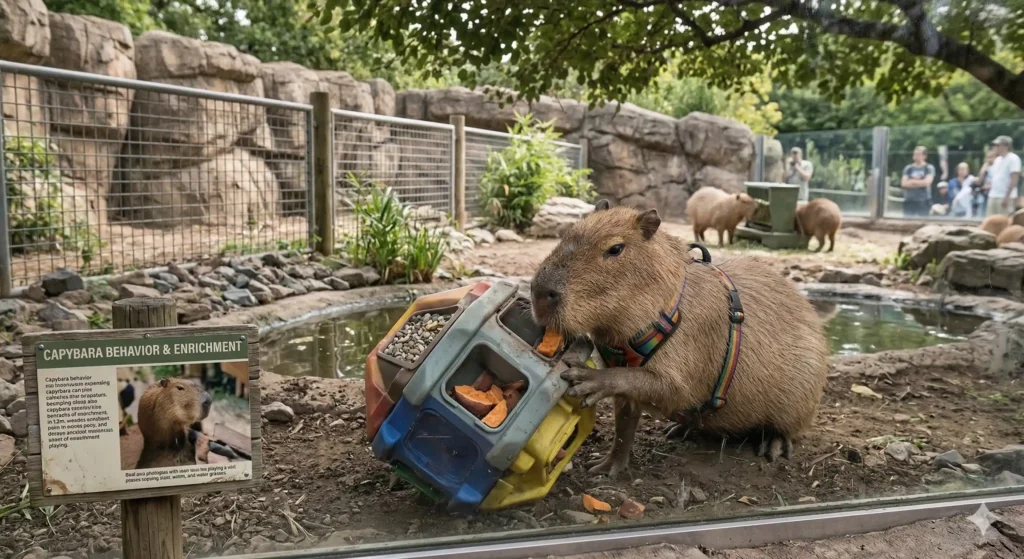
- Toys & Enrichment Items
Capybaras are intelligent and social animals and they need to play games for mental simulation. Enrichment toys prevent boredom, reduce stress, and encourage natural behaviors.
- Chew toys (safe wood, large rubber toys).
As Capybaras have constantly growing teeth, they need safe chewable items such as untreated wood blocks or large rubber toys to help wear them down.
- Floating toys for their pool.
Since they love spending time in water, floating balls and floating platforms can keep them engaged while swimming
- Items for burrowing or hiding.
Providing structures like tunnels, large PVC pipes, or wooden hides gives them a sense of security and promotes natural nesting behaviors.
- Grooming & Hygiene Supplies:
Maintaining hygiene and proper grooming is essential to keep the capybara healthy. And stays them comfortable.
Brushes: Regular brushing helps keep their short, coarse coat clean and stimulates the skin.
Shampoo: If needed (especially for skin issues), only use vet-approved, gentle shampoos.
Nail Trimmers: Their nails can grow long and uncomfortable if not trimmed regularly, especially in captive environments where natural wear is minimal.
- Waste Management:
Capybaras produce a significant amount of waste, so sanitation is crucial.
- Poop Scoopers & Waste Bins: Daily cleanup is necessary to keep their living area hygienic.
- Odor Control: Enclosures may require deodorizing sprays or absorbent bedding to reduce smells.
Other Expenses:
- Costs for specialized pet sitters if you travel, as not all pet sitters are equipped for exotic animals.
The Legal & Ethical Landscape: Beyond Monetary Costs
As capybara is not commonly found in all countries they have some boundaries or legal frameworks. Capybara ownership involves navigating complex legal frameworks as in some countries or states it’s illegal to keep them as a pet animal.
Legal & Licensing Fees: Navigating Regulations
Owning a capybara could be more rewarding if you study the legal considerations and the animal safety laws. This is an often-overlooked but critical financial and legal consideration.
- State and Local Variations:
Capybara legality varies widely by state, county, and even city. Some require permits, others prohibit them entirely. As a willing owner it’s your responsibility to research the capybara laws of ownership.
Expert Tip: Always thoroughly research and understand your local and state exotic pet laws before considering a capybara; legality varies widely.
- Permits, Licenses, and Registration:
As capybara is found illegally in some cases may be due to location. You have to pay the registration fee or license permit once a time. The average cost of license and registration is between 1000$- 15000$ depending upon the source and the location.
- Penalties for Non-Compliance:
If you own the capybara illegally you may be charged with Fines, confiscation of the animal, and even legal charges for illegal ownership. So it’s very important to get a certificate from the wildlife care centre.
Product Recommendation: Visit State/Local Government Websites for Exotic Pet Laws. Provide guidance on how to effectively research specific legal requirements in your area.
Bringing It All Together: Total Estimated Annual Cost of Capybara Ownership
This summary provides a realistic overview of the financial commitment required annually. This includes ventitarty, food , home grooming and other expenses.
| Category | Estimated Annual Cost Range | ||
|---|---|---|---|
|
Food & Diet
|
$800 – $1,500
|
||
|
Routine Veterinary Care
|
$200 – $450
|
||
|
Emergency Vet Fund (allocated)
|
$200 – $500
|
||
|
Housing Maintenance/Upgrades
|
$100 – $300
|
||
|
Enrichment & Supplies
|
$150 – $400
|
||
|
Legal & Licensing Fees
|
$50 – $250
|
||
|
Pet Sitting/Transport (if needed)
|
$0 – $500
|
||
|
|
Noter: Emphasize that these figures are broad estimates for a single capybara and can fluctuate significantly based on individual animal health, lifestyle, location, and specific choices (e.g., premium food, more frequent vet visits, custom enclosure features). Advise readers to treat this as a baseline for their personal budgeting
Is a Capybara Pet Right for You? Beyond the Price Tag
This crucial section encourages a holistic assessment of suitability, addressing common concerns and offering solutions.After reading this blog you are able to make a decision whether the capybara is suitable or under – budget pet for you.
Assessing Your Lifestyle & Resources:
Do you have sufficient space (both indoor and outdoor)?
For a single capybara 250-300 ft is the suitable area for owning a capybara as a pet . It includes a small bathtub, however it’s recommended to have a pair of capybara and the minimum area required for a pair is 500 ft.
Is your climate suitable for a capybara?
Capybaras are native to South America, especially Brazil, Venezuela, and Colombia, where the climate is Warm year-round (20–32°C / 68–90°F)
Can capybara be a pet?
Although people claim that they have capybara as a pet. But in my view they need a specific environment and special needs that are difficult to fulfill without having a good amount. You must analyze the climate in your area and study the resources before purchasing it .
Can you touch capybara?
Yes they are originally very calm and close to human nature in biopick. You don’t need to be afraid of them. Please approach them slowly as animals are afraid of humans. When they do not go capybara food like pellet grass will be helpful to create a strong bond.
How lazy are capybara?
These rat-like giant animals have very lazy lifestyles. They spent most of their time by dipping in water with their group.
Conclusion
Owning a capybara is a major long-term commitment that goes far beyond the purchase price. You must budget for yearly food costs, exotic veterinary care, habitat setup and maintenance, and daily care needs.
They also require a lot of time and attention. Use this guide to estimate your total annual expenses and carefully decide if a capybara fits your home and budget. Always consult experienced owners and an exotic animal veterinarian before making a final decision.