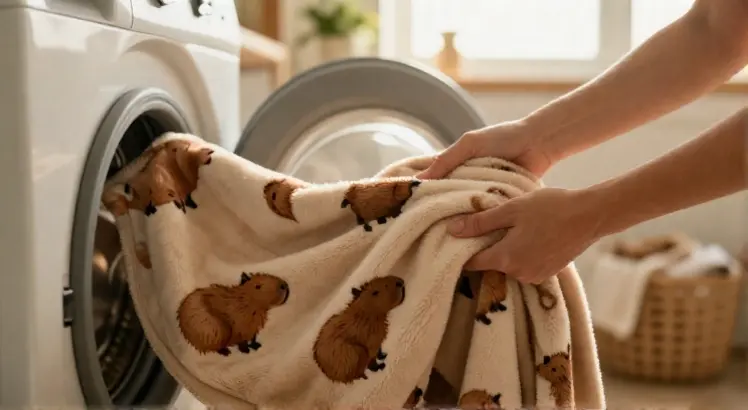
You just snuggled up with your adorable capybara print throw, and now it is laundry day. The big question pops into your head: can you put a capybara blanket in the dryer? The short answer is yes, usually, but the method matters enormously. Tossing that cozy rodent themed fleece into high heat can leave you with a stiff, pilled, or misshapen mess.
This guide walks you through exactly how to dry your capybara blanket safely, preserving its softness and vibrant design. Whether you own a lightweight flannel, a plush sherpa throw, or a wearable hoodie, you will learn the precise steps, fabric specific care tricks, and common mistakes to avoid.
Understanding Capybara Blanket Fabrics and Drying Risks

Capybara Flannel Throw Blanket
Check PriceBefore you even open the dryer door, you need to know what your capybara blanket is made of. The vast majority of these novelty blankets use synthetic fabrics like polyester fleece, microfiber, flannel (often a cotton polyester blend), or plush sherpa. Each reacts differently to heat. Most manufacturers label their throws as tumble dry low or air dry only for a good reason. High temperatures can melt or distort the fine synthetic fibers, causing that silky soft surface to turn rough and crunchy.
The primary risks of improper machine drying include:
- Fiber melt and scorching: Polyester melts at relatively low temperatures. A hot dryer setting can permanently fuse fibers, leaving hard, scratchy patches.
- Pilling and shedding: Excess friction and heat break delicate fibers. You end up with a blanket covered in tiny, unsightly fuzz balls.
- Print cracking and fading: Vibrant capybara patterns are often sublimated or screen printed. High heat can crack the design, making those cute faces look worn out after just a few washes.
- Shrinkage and warping: Even synthetic blends can shrink slightly and lose their shape if the dryer is too aggressive.
Many capybara enthusiasts assume one rule fits all blankets. In reality, a thin microfiber travel throw needs a completely different approach than a chunky cable knit or a plush lined option. Always check the sewn in care tag first. If the tag is missing, a good rule of thumb is to treat the blanket like delicate lingerie: low heat or no heat. For more details on choosing a quality throw that withstands drying, you can explore our guide to the best capybara blankets to understand which fabrics last longest.
Step by Step Guide to Drying Your Capybara Blanket

Capybara Cute Throw Blanket 40×50
Check PriceIf you decide machine drying is safe, following a precise protocol saves your blanket. Start with a properly washed item. Never put a soaking wet, heavy blanket directly into a dryer; it strains the motor and extends drying time, increasing heat exposure. Run an extra spin cycle in the washer first to remove excess water.
Prepare the Dryer and Blanket
Set your dryer to the lowest heat option, often labelled air fluff, no heat, or delicate. If you live in a humid climate and need a tiny bit of warmth, use ultra low or tumble dry low but never above that. Add a couple of clean, white tennis balls or wool dryer balls inside a cotton pillowcase (this prevents color transfer). The balls bounce around, preventing the synthetic fibers from clumping and matting. This drastically reduces drying time and keeps the blanket fluffy.
Monitor the Cycle Closely
Do not set a timer and walk away. Capybara blankets, especially those with printed designs, dry startlingly fast. Check every 10 to 15 minutes. Remove the throw while it is just slightly damp to the touch. Over drying is the number one killer of plush novelty blankets. The last bit of moisture evaporates quickly as you lay the blanket flat on a drying rack or a clean bed. This method locks in softness and prevents the dreaded crispy edge syndrome.
Post Drying Fluffing
Once almost dry, take the blanket out and give it a vigorous shake. Fluff the fibers with your hands against the nap. If the printed side feels slightly stiff, you can gently brush it with a soft bristle clothes brush to separate the fibers and revive the image clarity. This simple step makes a large capybara face look brand new again.
Air Drying vs. Machine Drying: Which Method Is Better?

Capybara Plush Blanket 40×50
Check PriceHardcore capybara merchandise collectors often argue that a dryer should never touch their prized throws. There is definitely a logic to that. Air drying is universally the safest method, posing zero risk of heat damage. However, it takes significantly longer and can leave thicker blankets feeling stiff without manual fluffing. Understanding the trade offs helps you decide.
Machine drying, when done correctly, restores a cloud like texture that air drying sometimes fails to achieve on its own. The tumbling motion, aided by dryer balls, lifts and separates the pile. Air drying a heavy sherpa blanket, for example, can result in a matted look because the fibers dry compressed. If you choose air drying, you must periodically lift and shake the blanket, possibly using a fan to circulate air and flipping it over halfway through. Never wring out a synthetic capybara blanket or hang it by clothespins that can stretch the corners out of shape. Instead, roll the wet blanket in a clean towel to absorb moisture and then lay it flat on a mesh rack.
A hybrid approach works wonders. Tumble the blanket on air fluff (no heat) for 10 minutes just to loosen the fibers, then lay it flat to finish drying. This gives you the mechanical softening without the heat risk. According to laundry advice, synthetic fleece should always avoid high heat and fabric softener, as coatings can trap moisture and lead to microbial growth and stiffness. The same rule applies to your capybara plush fleece.
Special Considerations for Wearable Capybara Blankets

Capybara Birthday Blanket 40×60
Check PriceWearable hoodies and giant hooded throws with capybara designs have exploded in popularity. These items often combine a thick, plush outer layer with a fleece or sherpa inner lining. They also feature kangaroo pockets, oversized hoods, and sometimes sewn in features like ears or snouts. Drying these garments requires even greater caution because their multiple fabric layers trap heat and moisture, and the stitching can warp.
Never put a wearable capybara blanket in a hot dryer. The thick hem fabrics take forever to dry while the polyester outer layer dries instantly, creating a dangerous hot spot. If you must machine dry, use the no heat cycle exclusively. Before drying, turn the entire hoodie inside out to protect the printed or embroidered capybara face.
Zip any zippers halfway and snap any buttons. This prevents the teeth from snagging and tearing the soft plush. If you are passionate about staying warm, you might wonder are wearable capybara blankets warm enough for winter. The good news is they are, but only if the insulation is not crushed by aggressive drying. Preserve the loft by pulling the still damp hoodie out of the dryer and gently pulling the seams back into shape. Let the hood and pocket areas air dry completely before wearing to avoid a mildew smell.
Frequently Asked Questions About Capybara Blanket Care

Mewaii Capybara Wearable Hoodie
Check PriceCan I use dryer sheets with a capybara blanket?
It is not recommended. Dryer sheets and liquid fabric softeners leave a waxy coating on synthetic fibers. This residue clogs the tiny air pockets that make the blanket feel fluffy and breathable. Over time, the coating traps odor and reduces the blanket’s ability to wick away moisture. Instead, use wool dryer balls. They naturally soften fibers without any chemical buildup, and they cut down on static electricity.
My capybara blanket has matted fur after drying. Can I fix it?
Yes, in most cases you can revive it. Lightly dampen the matted area with a spray bottle filled with plain water. Use a wide toothed comb or a pet slicker brush and gently tease the fibers loose, working from the ends toward the base of the pile. After brushing, let the blanket air dry completely. A final blast of cool air from a hair dryer while fluffing with your fingers can restore almost original volume.
Is it safe to iron a wrinkled capybara blanket?
Do not iron directly. Polyester and microfiber will melt instantly under a hot iron plate. If you must remove wrinkles, use a clothes steamer held at a safe distance, or hang the blanket in a steamy bathroom. If you absolutely need an iron, place a thick, white cotton towel between the iron and the blanket, set the iron to the lowest synthetic setting with no steam, and gently press without moving the iron around.
Conclusion

Moyel Capybara Wearable Hoodie
Check PriceSo, can you put a capybara blanket in the dryer? Definitely, but only with meticulous care. The secret lies in respecting the synthetic fibers. Use the lowest setting possible, pull it out while it is still retaining a hint of dampness, and never, ever apply high heat.
Whether you are caring for a small lap throw or an oversized wearable hoodie, the combination of no heat cycles and air drying will keep the charming capybara print legible and the fabric luxuriously soft for years. A few extra minutes of attention during laundry day guarantee your snuggly friend stays as inviting as the day you bought it. With these techniques, you will master the art of drying capybara blankets and enjoy endless cozy moments without ruining the charming design.