
You’ve seen the videos: a capybara lounging in a pool, a cat napping on its back, a human scratching behind its ears while it closes its eyes in bliss. The fantasy is a calm, oversized rodent that turns your backyard into a zen garden. The reality in Virginia is a stack of legal requirements that start with a single form and end with an agency inspector deciding whether your setup is good enough.
Capybaras are not banned here. They’re classified as nonnative exotic animals under 4VAC15-30-40, and the Virginia Department of Wildlife Resources (DWR) issues permits to people who can prove they’ll house and care for the animal properly. That’s the short answer: legal, but only with a permit, and the permit is evaluative. DWR doesn’t just stamp your application because you paid a fee.
|
I remember staring at the PERM-025 form and realizing it asked more about fence gauge, pool filtration, and veterinary contingency plans than about the animal’s temperament. The charm of a capybara didn’t matter. What mattered was whether I could build a secure, clean, and escape-proof enclosure that a DWR officer would sign off on. That moment reframed everything. This is not a registration. It’s a demonstration that you’ve thought through the hard parts.
This guide is built from the actual legal code, the PERM-025 form, and direct conversations with DWR, not forum speculation. Before you fall in love with the idea, understand the commitment: capybaras need a pool, a companion, and an exotic vet, and first-year costs routinely exceed $3,000 as of publication. Let’s start with the law itself.
The Straight Answer: Capybaras Are Legal with a Permit
Let’s start with the law itself. Capybaras are not banned in Virginia. They’re classified as nonnative exotic animals, and you need a special permit from the Virginia Department of Wildlife Resources (DWR) to possess one. The permit is evaluative: DWR reviews each application individually and can deny it.
|
|
Virginia Administrative Code 4VAC15-30-40: What It Actually Says
Now let’s look at the actual text of the regulation that makes all of this possible, or impossible, depending on your situation.
The Core Requirement: A Special Permit Is Mandatory
The regulation opens with a sentence that leaves no room for interpretation: “No person shall import, possess, or sell any nonnative exotic animal without first obtaining a special permit from the department.”
Capybaras (Hydrochoerus hydrochaeris) are not native to Virginia, so they fall squarely into the nonnative exotic animal category. That means the permit requirement applies to you whether you’re bringing one in from out of state, keeping one you already have, or selling one you’ve bred.
|
What the Permit Covers: Importation, Possession, and Sale
The same special permit covers all three actions, importation, possession, and sale. You don’t need separate paperwork for each. But the permit is personal to the holder. It doesn’t travel with the animal.
I remember the moment I realized the permit is personal. A breeder I contacted had their own permit, but that didn’t cover me. I’d still need to apply for my own before the capybara could legally come home.
|
How DWR Decides: “Consistent with the Department’s Fish and Wildlife Management Program”
DWR doesn’t rubber-stamp applications. The regulation says a permit may be issued only when the possession is “consistent with the Department’s Fish and Wildlife Management Program.” In practice, that means DWR evaluates three things: whether the animal poses a threat to native wildlife, whether you can provide adequate care, and whether the animal creates a public safety or nuisance risk. These are the real criteria, and they’re what most quick guides skip.
|
The Statutory Authority: Code of Virginia § 29.1-542
This regulation isn’t an agency whim. It’s authorized by Code of Virginia § 29.1-542, which gives DWR the power to require permits for nonnative species, set conditions, and enforce penalties. Violating the permit requirement is a Class 3 misdemeanor under § 29.1-505, with fines up to $500. Knowing the statutory source matters: it means the requirement is grounded in law, not just policy.
|
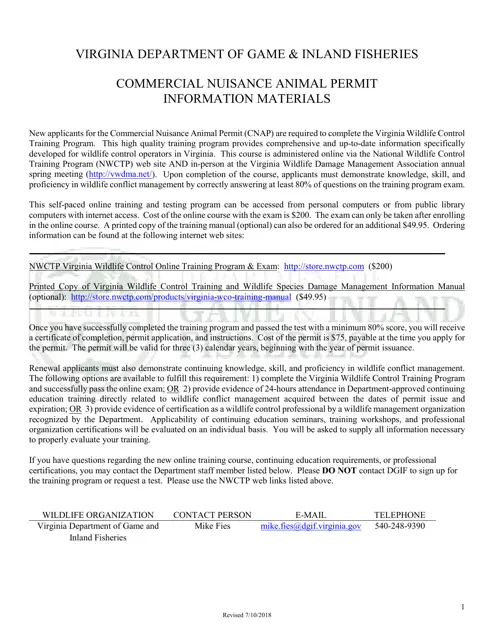
The PERM-025 Permit Application: A Step-by-Step Guide
Understanding the law is step one. Step two is the paperwork that proves you meet its requirements. The PERM-025 isn’t a formality: it’s the only legal pathway to possess a capybara in Virginia, and DWR reads every line.
|
Where to Get the Form and What It Looks Like
You’ll find the PERM-025 as a two-page PDF on the DWR website under the “Wildlife Permits” section. The first page collects your personal and species information. The second page asks for the enclosure description, care plan, and your signature. It’s straightforward, but the blank boxes expect real detail: not one-word answers.
The $10 Non-Refundable Fee and Permit Period
Every application requires a $10 fee. It’s non-refundable, so if DWR denies your permit, that money is gone. Permits run January 1 through December 31, no matter when you apply. If you get approved in June, your permit still expires at year’s end. Annual renewal is mandatory, there’s no multi-year option.
What Information You’ll Need to Provide
The form asks for your contact details, the species (Hydrochoerus hydrochaeris), the number of animals, the purpose of possession, and the source or breeder. Then it gets into the real substance: a full enclosure description and a written care plan. Don’t skimp here. Describe dimensions, materials, locking mechanisms, water features, and how you’ll meet the animal’s dietary and veterinary needs. A vague answer signals you haven’t done the work.
|
The Approval Criteria: What DWR Evaluates
DWR reviews applications against four criteria: escape prevention, animal welfare, public safety, and compliance with local zoning. They’re not just checking a box. An enclosure that looks flimsy or a care plan that ignores the capybara’s social needs can get you denied. The agency has the authority to say no, and it does.
|
Renewal: How to Keep Your Permit Active
Renewal means submitting a new PERM-025 and another $10 fee each year. If your enclosure, address, or animal count changed, update the form. A lapsed permit isn’t a technicality: it means you’re illegally possessing the animal the day after December 31.
|
|
But what if someone decides to skip the permit? Here’s what Virginia law actually does about it.
What Happens If You Get Caught Without a Permit
What if someone ignores the permit requirement? Here’s what Virginia law actually does.
Fines and Legal Penalties Under Code of Virginia § 29.1-542
Possessing a capybara without a permit is a Class 3 misdemeanor. The fine caps at $500. Court costs and a criminal record are the heavier burden.
Confiscation of the Animal
DWR conservation police can seize the capybara immediately. You’ll be billed for transport, boarding, and care. One owner lost their capybara within 48 hours of a noise complaint; boarding fees ran into the thousands, and the animal was never returned.
How Enforcement Actually Works
Enforcement is real. Neighbor complaints, social media posts, and routine DWR checks are common triggers.
|
|
Even with a state permit, your local government may have the final say.
Local Ordinances: Your County or City May Say No
Even with a state permit in hand, your local government may have the final say.
Why State Law Isn’t Enough
Virginia operates under the Dillon Rule, a legal principle that limits local governments to powers expressly granted by the state. But here’s the catch: localities can still adopt stricter animal regulations under their zoning and public safety authority.
A DWR permit satisfies state law. It does not override a county ordinance that says you can’t keep a capybara in your backyard. You must comply with both state and local laws.
Many first-time owners miss this, assuming the state permit is the only hurdle.
|
Zoning codes add another layer. Even if your county doesn’t name capybaras, it may classify them as “exotic animals” or “livestock” and restrict them to agricultural zones. A residential lot, no matter how large, might not qualify.
|
How to Check Your Local Exotic Animal Rules
|
Start with your county’s official website. The municipal code is usually under a “Government” or “Ordinances” tab. Use the search function for terms like “exotic,” “wild,” “capybara,” and “non-native.” Look for a prohibited species list.
If the language is vague or you find nothing, pick up the phone. Call the zoning office or animal control and ask specifically about “capybaras” and “non-native exotic animals.” Write down the name of the official you speak with and the date. That record is your proof of due diligence.
|
Examples of Local Restrictions
The patchwork is real. In Arlington County, Chapter 2 of the county code prohibits keeping wild and exotic animals as pets, with a narrow registry for animals owned before the 2017 ban. Fairfax County restricts wild or exotic animals under Chapter 41.1, and its zoning ordinance further regulates animal keeping by lot size and type. A capybara in a Fairfax townhouse is almost certainly a nonstarter.
Rural counties often have no specific exotic animal ordinance, but the state permit still applies. The absence of a local ban doesn’t mean you’re in the clear; it means you have one less layer to worry about, but you still need that DWR permit.
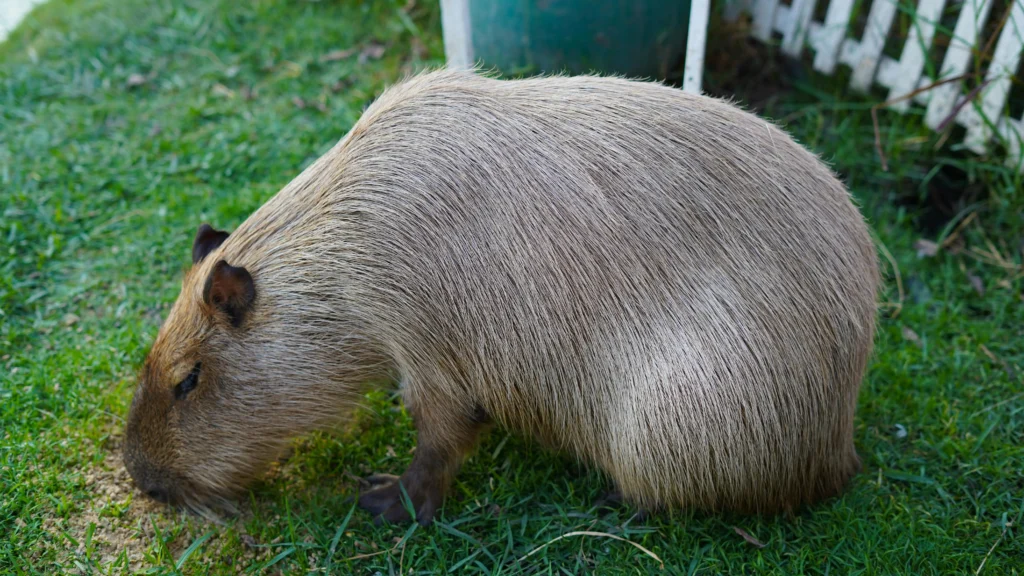
Myth Busting: What You’ve Heard About Capybara Legality in Virginia
Before you go down the rabbit hole of ordinances and applications, let’s clear up the misinformation that’s probably already shaped your expectations.
|
Myth 1: “Capybaras Are Completely Illegal in Virginia”: Reality: They are not banned. The state allows ownership with a permit. The confusion comes from people hearing ‘permit required’ and assuming it’s a ban.
Virginia doesn’t ban capybaras. It requires a permit. That’s a crucial difference, and it’s the one most social media posts get wrong.
Myth 2: “Capybaras Are Classified as Domestic Pets, So No Permit Is Needed”: Reality: Virginia law does not classify capybaras as domestic animals. They are nonnative exotic wildlife, and the permit requirement is explicit.
Virginia law classifies capybaras as nonnative exotic animals, not domestic pets. The permit requirement in 4VAC15-30-40 is explicit.
Myth 3: “The Permit Is Impossible to Get, So Don’t Bother”: Reality: DWR does issue permits to private individuals who meet the criteria. It requires preparation but is not a blanket denial.
DWR does issue permits to private individuals. It’s not a rubber stamp, but it’s not a blanket denial either. Preparation matters.
Myth 4: “No One Enforces These Laws, So You Can Keep a Capybara Quietly”: Reality: DWR conservation police do enforce the regulations. A neighbor’s complaint or social media post can trigger an investigation.
DWR conservation police actively enforce these rules. A single complaint or a public Instagram post can trigger a visit. I once watched a Virginia owner lose their capybara after a neighbor’s noise complaint led to a permit check, underscoring why capybara sounds and meanings matter for prospective owners. The animal was rehomed within a week.
Myth 5: “If You Get a Permit, You Can Breed and Sell Capybaras”: Reality: The standard PERM-025 permit is for possession, not commercial breeding. Selling may require additional permits or a different classification.
The standard PERM-025 permit covers possession, not commercial breeding. Selling capybaras likely requires additional authorization.
How Virginia Compares to Other States: A National Context
Virginia’s approach makes more sense when you see how other states handle the same question. The permit requirement isn’t an outlier: California maintains similar permit rules, reflecting the national norm. Nationally, capybara legality falls into four distinct categories. Virginia sits squarely in the largest one.
State | Legal Status Category | Permit Required | Key Notes |
Virginia | Permit required | Yes | DWR PERM-025; no statewide ban |
Maryland | Generally prohibited | N/A | Capybaras prohibited as pets under state exotic animal regulations |
Washington D.C. | Generally prohibited | N/A | All non-domesticated animals generally prohibited |
North Carolina | Permit required (verify) | Yes | Permit from NC Wildlife Resources Commission for captive cervids and other exotics (verify) |
Tennessee | Permit required (verify) | Yes | Classified as Class II wildlife; permit from TWRA (verify) |
West Virginia | No permit (verify) | No | No statewide exotic animal permit requirement for capybaras (verify) |
Kentucky | Permit required (verify) | Yes | Exotic wildlife possession permit from KY Dept. of Fish and Wildlife (verify) |
Pennsylvania | Permit required (verify) | Yes | Exotic wildlife possession permit from PA Game Commission (verify) |
New Jersey | No permit | No | No statewide permit; check local ordinances |
New York | May require permit* | Varies | No statewide ban, but NYC and some counties prohibit; check local laws |
*The “May require permit” category means there is no statewide ban, but local restrictions, city or county ordinances, may effectively prohibit ownership or impose their own permit requirements. Always verify with your specific locality.
While you’re getting your bearings on the current rules, a recent regulatory change could affect your plans.
The May 2025 Proposed Regulation Update: What It Means for Capybara Owners
Even as you absorb the current rules, a recent update shows how quickly things can shift.
What the Proposal Actually Says
In May 2025, the Virginia Register published a proposed update to 4VAC15-30. The final regulation was adopted December 1, 2025, and took effect January 1, 2026. It repealed 4VAC15-30-10 and removed a snakehead fish exemption, but left 4VAC15-30-40 untouched. That’s the section requiring a permit for nonnative exotic animals like capybaras.
|
Does It Change Capybara Ownership?
No. The adopted changes didn’t mention capybaras or alter the core permit requirement. I remember refreshing the Virginia Register site in late 2025, scanning the final rule for any mention of capybaras. When I saw 4VAC15-30-40 was untouched, I exhaled. The permit process I’d been through was still the same. Capybara ownership remains subject to the same DWR permit process, with no new restrictions or fees.
Why This Matters for Your Application
Future updates could adjust evaluation criteria or add species to restricted lists without guaranteed grandfathering. Staying informed is essential.
|
|
Practical Ownership Considerations: Beyond the Permit
The law is only half the story. Even with a permit approved, the daily reality of capybara care is where most people’s plans collide with the truth.
Enclosure Requirements: Space, Fencing, and Water
DWR expects somewhere around 200 square feet per animal, and that’s not just a patch of grass. You need sturdy four-foot fencing with a dig-proof barrier buried at least a foot deep, because capybaras are strong and will test every seam. A pool or stock tank with a ramp and clean, filtered water is non-negotiable. They defecate in water, so filtration isn’t optional.
Winter means a heated shelter. Virginia’s cold snaps are lethal for a tropical rodent. You might picture your fenced backyard and think it’s enough. Then you measure out 200 square feet, a small apartment’s worth of space, and realize the pool, shelter, and dig barrier eat up most of it. Northern Virginia’s suburban density makes compliant setups nearly impossible for most residents; a townhouse lot simply can’t absorb these demands.
|
Social Needs: Why One Capybara Is Usually Not Enough
Capybaras are herd animals. In the wild they live in groups of ten to twenty. A solitary capybara risks chronic stress, depression, and behavioral problems that no amount of human attention can fix. DWR evaluates applications against welfare standards that include social needs, and a single-animal application may be denied on those grounds. If you’re serious, plan for at least two, and understand that introducing a new capybara later is far harder than starting with a bonded pair.
|
Diet and Veterinary Care
Their diet is straightforward but not cheap: high-quality grass hay, fresh greens, and specialized rodent pellets formulated for large herbivores.No fruit-heavy treats. Their digestive systems can’t handle sugar. Veterinary care is the real bottleneck.
You need a USDA-licensed exotic vet with experience treating large rodents, and those are scarce. DWR may require a letter of intent from that vet before approving your permit. Find one early.
Call and ask directly if they’ll see a capybara and provide the letter. Many won’t.
|
The Real Costs: Beyond the $10 Permit Fee
The application fee is the smallest number you’ll see. Enclosure construction runs roughly $2,000 to $5,000 or more, depending on materials and whether you build it yourself. A pool with filtration adds around $500 to $1,500. Annual food costs land between $600 and $1,200. Veterinary care, even for routine checkups, can hit $300 to $1,000 a year, and emergencies multiply that fast.
Heating and maintenance add another $200 to $500 annually. You’re looking at a first-year outlay that can easily top $7,000, with ongoing costs above $2,000 a year. That’s the real commitment.
|
Interactive Permit Readiness Checklist
Before you spend a dollar on an application fee, use this checklist to see if you’re actually ready.
|
Print this page and physically check each box.
- I know the legal classification of capybaras under Virginia law.
- I have confirmed my local zoning allows exotic animals.
- I have a plan for a secure, appropriately sized enclosure.
- I can provide a permanent water feature for swimming.
- I have adequate shelter from Virginia’s weather extremes.
- I have identified a veterinarian who treats capybaras.
- I have budgeted for ongoing food, care, and unexpected costs.
- I understand capybaras are social and need at least one companion.
- I have located a reputable breeder who can provide healthy animals.
- I am prepared to renew the permit annually and comply with inspections.
|
Frequently Asked Questions
You probably still have questions. Here are the ones DWR hears most often.
Can I breed capybaras under the PERM-025 permit?
No. The standard PERM-025 permit authorizes personal possession only. Breeding, selling, or any commercial activity requires separate authorization from DWR. Contact the agency before you plan a litter.
Can I take my capybara out in public?
The permit does not cover public exhibition. Taking a capybara to a park, store, or other public space could violate local ordinances and create public safety risks. Educational display may fall under a different permit category. Check with DWR.
What if I’m moving to Virginia with a capybara I already own?
You must obtain a PERM-025 permit before bringing the animal into the state. The same permit covers importation and possession. Contact DWR early to avoid a gap in legal status.
How long does the permit application take?
Plan on at least several weeks. DWR may request additional information, which can extend the timeline. Apply well before you acquire the animal.
What if my permit is denied?
DWR provides a written explanation. Common reasons include inadequate enclosure plans, lack of veterinary access, or a conflict with local ordinances. A denial is not final. Address the specific deficiency and reapply.
|
So, after all of this (the law, the form, the costs, the myths), is a capybara right for you?
Final Thoughts: Is a Capybara Right for You?
After covering the law, the form, the costs, and the myths, the question remains: is a capybara right for you? Ownership is legally possible. But it demands serious commitment, not impulse. The permit process is a real, evaluative hurdle that exists to protect animals and communities.
If you can meet the requirements, the path is clear and the reward is a unique bond. If not, see capybaras at zoos or admire them from afar. There’s no shame in responsible restraint. Download PERM-025, check your local ordinances, call DWR, and share this guide.