
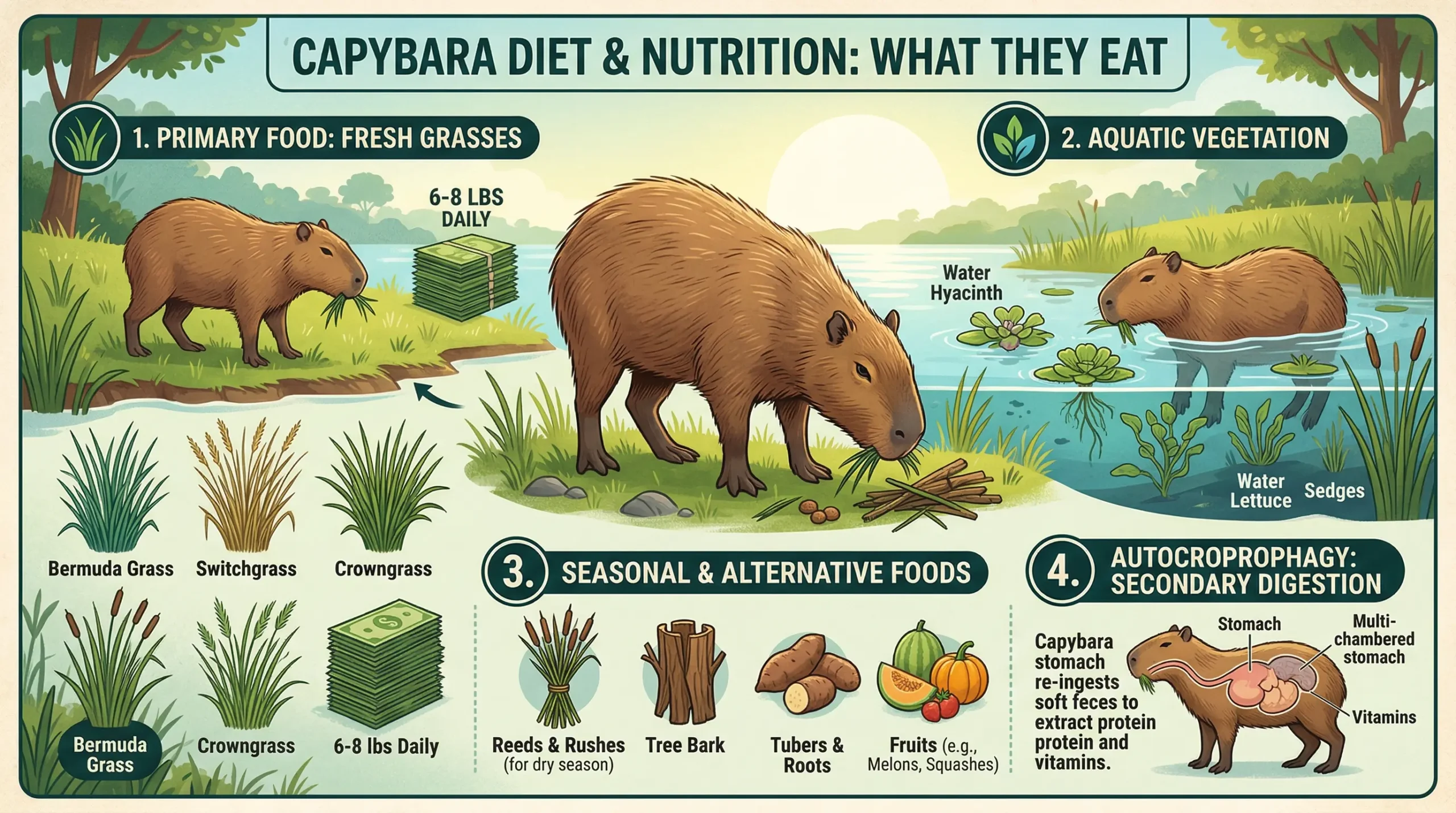
What gives energy to their bodies? Lets research into the fascinating dietary world of the capybara, a topic crucial for understanding their biology and ensuring their well-being.
This guide explains more than just what capybaras eat. It also looks at how their digestive system works, how their diet changes in different seasons, and what nutrients pet capybaras need to stay healthy.We’ll clear up common myths and give helpful, practical information for anyone who loves or owns a capybara, including their diet cost.
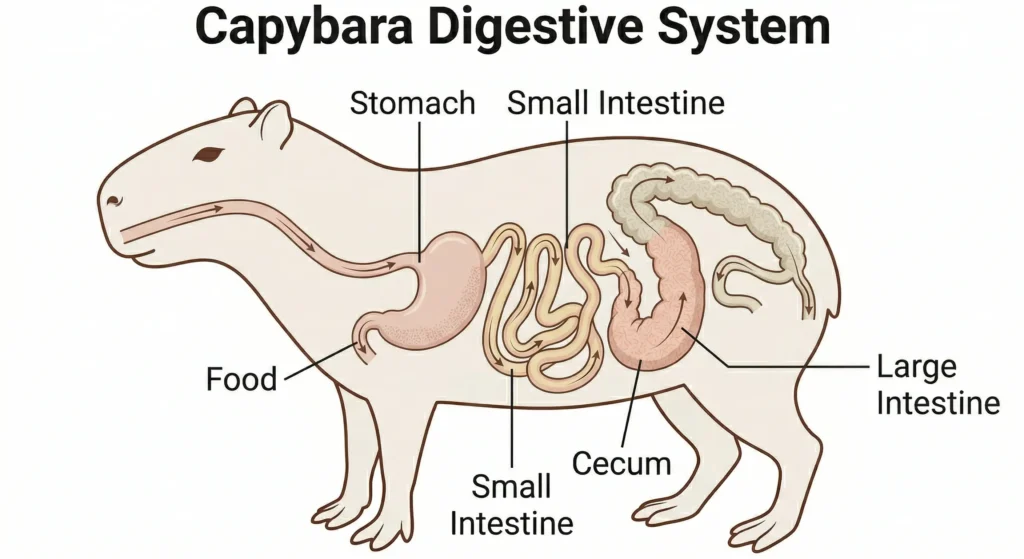
The Capybara’s Digestive System: Built for Fiber
Capybaras are natural grass eaters with a digestive system made for high-fiber foods. They use hindgut fermentation, where helpful bacteria break down tough plants into nutrients. This allows them to get energy from grass and water plants efficiently, without needing a complex stomach like cows.
The Wild Capybara Diet: A Forager’s Feast
Capybaras are primarily herbivorous, with a diet dominated by grasses, but they also consume a variety of other plant materials depending on availability. Authoritative sources such as ecological studies and wildlife organizations like the IUCN highlight the following components:
Primary Food Source:
The diet of capybara not strict as much other animal They will eat almost anything and everything primarily they eat grass and other aquatic plants Capybaras are selective grazers, often preferring tender shoots and young leaves.They focus on vegetation near water bodies, where both aquatic plants and high-quality grasses are abundant.Seasonal availability greatly influences which grasses or plants are consumed at a given time.
Due to regional change and climate effects. In the Amazon, they eat more aquatic plants and leaves; in the Pantanal, grasses dominate with seasonal shifts, while in other areas, terrestrial plants and opportunistic foods make up most of their diet.
Fact: a capybara can consume more than 3 kg of grass a day!
Fruits & Vegetables:
Although fruits and vegetables are not the primary food source for capybara but due to regional and seasonal changes they eat for vitamins and protein opportunistically. In fruits they like to eat Oranges, and melons. They cannot eat fruits in routine because they will lead them to bloating. Vegetables provide an important source of fiber for capybaras to help them maintain their digestive health. Cabbage, carrots or pumpkin are all good.
Interesting Information: Capybars have Foraging Behavior means they are selective grazers, often choosing specific plant parts or species to meet their nutritional needs. Their feeding habits are closely tied to seasonal and environmental changes
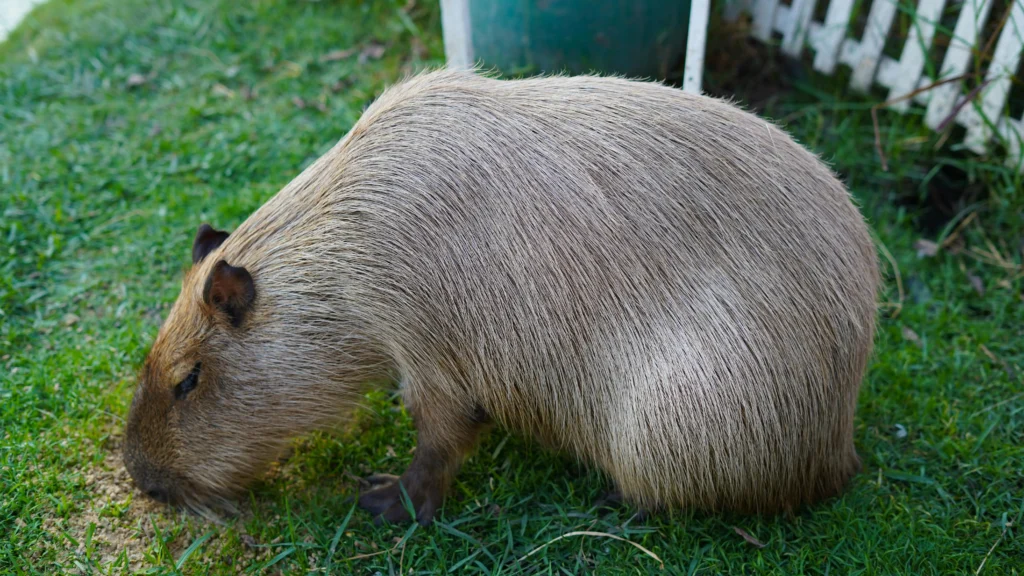
The Pet Capybara Diet:
As a pet capybara they cannot get nutrients as much as they get in Forest or native areas, for the adjustments of that nutrients you should give them specific to make your pet healthy and long live.
Here are the expert insights from exotic animal veterinarians
Foundation of the Diet:
As a grazer the favourite diet of capybara is fresh hay. Unlimited access to grass hay such as timothy or orchard grass is essential. Constant availability supports gut health, prevents dental overgrowth, and satisfies natural grazing behavior.
Supplemental Foods (in Moderation)
Always consult an exotic animal vet for product selection.A variety of safe greens such as romaine lettuce, kale, spinach (in moderation due to oxalates), dandelion greens, and cilantro provide additional vitamins and minerals.
For natural alternatives you can give vegetables and fruits as an alternative but only in small amounts.Carrots, bell peppers, zucchini, and cucumber can be offered in manageable, washed pieces for variety.
Foods to Avoid for Capybaras (Dangerous & Unsuitable)
General Rule: If unsure, do not feed.
One of the biggest challenges for capybara owners is knowing what not to feed. Offering the wrong food can cause digestive issues, toxicity, or even life-threatening illness. Feeding sweetened things or artificial flavors to capybara is just like a poison to them.
Toxic Plants
Certain plants are highly poisonous to capybaras and must never be offered such as: oleander, azaleas, rhododendrons, lily of the valley, foxglove, and avocado (all parts). Even small amounts can be harmful.
Processed Human Foods
Sugary snacks, bread, dairy products, salty foods, and any cooked human food provide no nutritional benefit and may cause digestive upset, obesity, or toxicity.
High-Sugar Fruits (Excessive Amounts)
While some fruits like apples or berries are safe in very small amounts, too much fruit can lead to diarrhea, weight gain, and gut imbalance.
Certain Vegetables
Avoid onions, garlic, chives (all alliums), rhubarb leaves, and potato skins, as they contain compounds toxic to capybaras.
Moldy or Spoiled Food
Never feed food that is moldy or spoiled, as it can harbor dangerous bacteria and toxins.
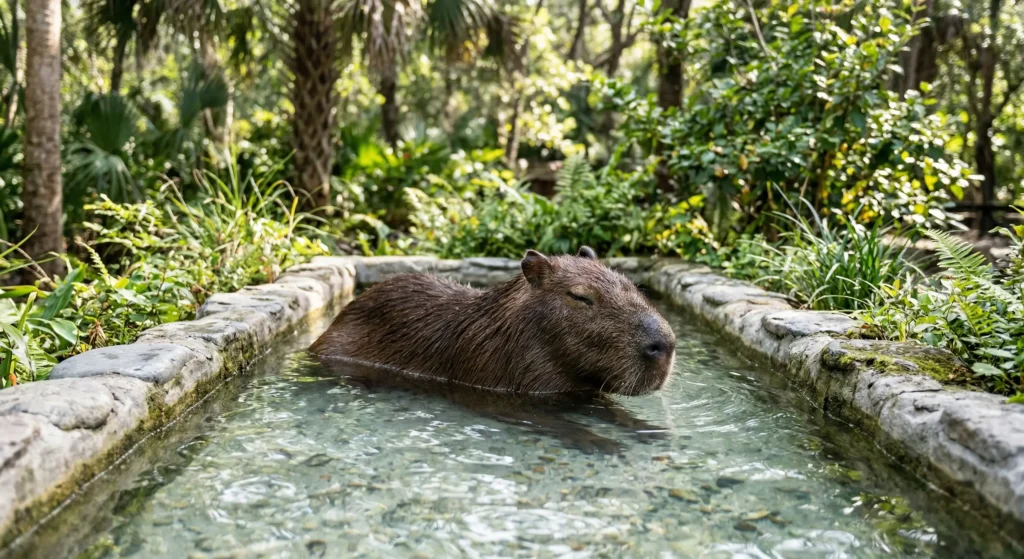
The Importance of Water in a Capybara’s Diet
Hydration is just as important as nutrition for keeping capybaras healthy. Capybaras must always have access to fresh, clean water in large troughs or sturdy bowls, with frequent refills to prevent contamination. Most importantly, water is essential for nutrient absorption and fiber breakdown in their hindgut fermentation system; without adequate hydration, their digestion quickly suffers.
Coprophagy: Why Capybaras Eat Their Poop
One of the most fascinating aspects of a capybara’s digestion is their re-ingestion of Cecotropes specialized droppings produced in the hindgut. While it may look like “eating poop,” it’s far more complex and essential to their health. The capybara’s digestive system works on a hindgut fermentation system. In this they break down high fibre food into Cecotropes or small elements.they are rich in vitamins especially B. Other hindgut fermenters such as rabbits and guinea pigs also rely on it to thrive on high-fiber diets. Far from being unhealthy, this behavior is a natural and necessary part of their biology. So don’t panic if you see your capybara eating their poop, it is perfectly normal for them
| Diet Aspect | Wild Capybara Diet | Pet Capybara Diet |
|---|---|---|
|
Primary Forage
|
Unlimited high-quality grass hay (Timothy, Orchard), fresh, untreated grass (if available)
|
Diverse native grasses, aquatic plants (reeds, hyacinths)
|
|
Supplemental Forage
|
Bark, twigs, some fallen fruits/seeds (seasonal)
|
Safe leafy greens (romaine, kale, dandelion), small amounts of safe vegetables (carrots, bell peppers)
|
|
Pellets/Chow
|
None
|
Species-appropriate capybara pellets or high-fiber guinea pig/rabbit pellets (vet-recommended, limited)
|
|
Fruits
|
Opportunistic, seasonal consumption of wild fruits
|
Very limited, as treats (small pieces of apple, melon, berries)
|
|
Water Source
|
Natural bodies of water (rivers, lakes, wetlands), plant moisture
|
Constant access to fresh, clean drinking water (large bowls/troughs), large pool for soaking
|
|
Coprophagy
|
Essential for nutrient re-absorption from natural forage
|
Essential for nutrient re-absorption from captive diet
|
|
Dental Wear
|
Constant grazing on abrasive wild plants
|
High-fiber hay, safe chew branches (willow, aspen), occasional safe, hard vegetables
|
|
Dietary Variety
|
Highly varied based on ecological niche, season, and plant availability
|
Variety achieved through different hays, safe greens, and very limited approved vegetables/fruits
|
Common Feeding Mistakes to Avoid
Feeding capybaras may seem simple, but even small mistakes can lead to serious health problems. Here is the list of common mistakes you should avoid.
| Mistakes |
|---|
|
Overfeeding Sugary Treats
|
|
Feeding Unidentified Plants
|
|
Lack of Fiber.
|
|
Inconsistent Feeding Schedule or Portions
|
|
Ignoring Coprophagy
|
|
Insufficient Water Access.
|
|
Not Consulting a Veterinarian
|
Expert Tip: Regularly monitor weight, stool consistency, and overall behavior as key indicators of dietary health. Small adjustments early can prevent serious issues later.
FAQs about Capybara Diet
Can capybaras eat guinea pig food?
Capybaras can sometimes eat high-fiber guinea pig or rabbit pellets, but it’s important to consult an exotic animal veterinarian first. Their nutrient requirements differ, and pellets should only be used as a supplement, not the main diet.
How much do capybaras eat in a day?
As a general guideline:
Hay/Grass: Unlimited access; should form the bulk of the diet.
Pellets: Small portions (vet-recommended amounts), depending on age and weight.
Supplements/Greens: Offered in moderation to provide vitamins and variety.
What are signs of an unhealthy diet in a capybara?
Signs of an unhealthy diet in a capybara include sudden weight loss or gain, changes in stool such as diarrhea or constipation, lethargy or decreased activity, and dental problems like overgrown teeth, and if any of these appear, you should consult an exotic animal veterinarian immediately.
How often should I feed my pet capybara?
Capybara is a grazer. They need food all the time and eat according to their mood .You must provide at least grass all day..
Where can I buy capybara food?
You can purchase Timothy hay, orchard grass hay, or other high-fiber options at pet stores or online.while the pellets from exotic pet suppliers or veterinary clinics.
Do capybaras need Vitamin C supplements?
Yes. Like guinea pigs, capybaras cannot synthesize vitamin C. It can be provided through safe leafy greens, small amounts of fruit, or vet-approved supplements. Always check doses with an exotic animal veterinarian.
Conclusion:
Good capybara care depends on careful observation, proper knowledge, and advice from an exotic animal vet. When owners understand their diet and needs, capybaras can stay healthy and happy. Learning how to care for them also helps people appreciate these unique, water-loving animals even more.