
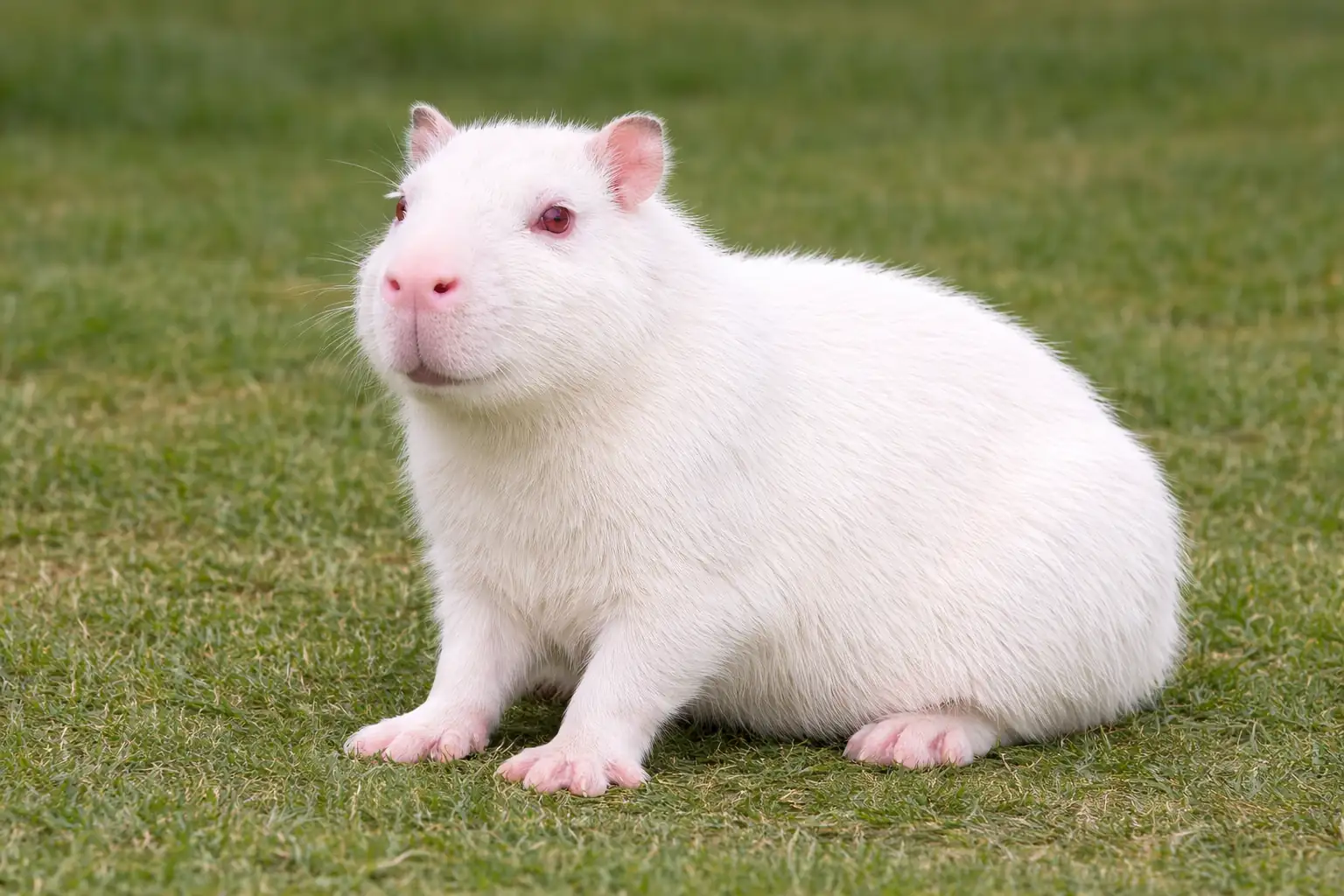
Imagine seeing a capybara, which is usually brown, but this one is completely white with red eyes. This rare look is caused by albinism, a genetic condition that removes color from the skin, fur, and eyes.
Albino capybaras are very rare and special. However, their condition can also cause health challenges, such as sensitive skin and poor eyesight. In this guide, you will learn what causes albinism and what special care these unique animals need.
FACT: Approximately 1% of the capybara population exhibits this rare trait.
By the end of this guide, you will understand what albinism in capybaras is and how it is different from similar conditions like leucism. You will also learn about their health needs, special care, and why they are unique in nature.
This guide will also clear up common myths and give you simple, accurate facts to help you better understand these rare white capybaras.
What is Albinism? The Genetic Basis
Most capybaras in South America are known for their earthy brown color. However, because of albinism, some rare capybaras are born with white fur, pale skin, and red eyes.
Albino capybaras are not “discovered” at a certain time because albinism is a natural genetic condition. Like in other mammals, it happens when animals do not produce enough melanin, the pigment that gives color to the skin, hair, and eyes.
Because they lack melanin, albino capybaras often have sensitive skin that can be harmed by UV rays and weaker eyesight, which can make survival more difficult.
Interesting Info: Melanin is a natural pigment made by special cells called melanocytes found in the skin, hair follicles, and eyes. Its main roles include giving color to hair , body and eyes, also protects from UV rays
There are two kinds of Albinism named as Oculocutaneous and Albinism. Here are some detailed guide how it effect and cause which problem:
Key Differences of Oculocutaneous Albinism:
| Feature | Oculocutaneous Albinism (OCA) | Ocular Albinism (OA) |
|---|---|---|
|
Affected areas
|
Eyes, Skin, and Hair
|
Mostly eyes only
|
|
Pigmentation
|
Very light or no pigment in skin/hair
|
Normal skin/hair color, only eyes affected
|
|
Vision problems
|
Yes
|
Yes (often more severe)
|
|
Inheritance
|
Autosomal recessive (both parents carry gene)
|
X-linked (mostly affects males)
|
|
Common Types
|
OCA1, OCA2, OCA3, OCA4
|
OA1 (main type)
|
Identifying an Albino Capybara: Characteristics and Crucial Distinctions
Apparently Albino capybara are cuter than usual capybaras. They have very rare skin colors, unique eyes and body.
Albino Capybara Characteristics:
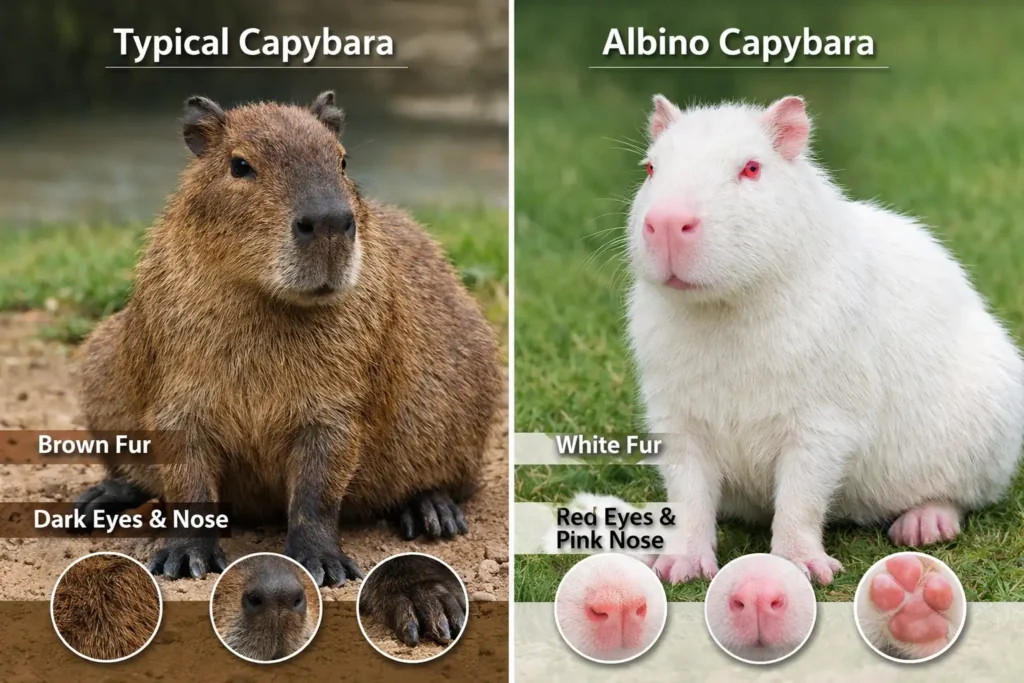
Albino capybara have a pure white or very pale skin which is the main distinction and an easy identification for people. As compared to typical capybaras, they have brown fur .
Due to lack of pigmentation Albino capybara have red or pink color eyes. Which allows blood vessels to show their shades .They have pale pink or pink nose and have paw pads.
Albinos skin is more sensitive than typical capybara and they have a low range of eyesight.
🐾 Albino Capybara vs. Typical Capybara — Comparison Table
| Feature | Albino Capybara | Typical Capybara |
|---|---|---|
|
Fur Color
|
Pure white or very pale
|
Brown or dark brown
|
|
Eye Color
|
Red or pink (due to visible blood vessels)
|
Brown or black
|
|
Nose & Paw Pads
|
Pale pink or pink
|
Dark brown or black
|
|
Skin Sensitivity
|
More sensitive to sunlight (UV)
|
Less sensitive
|
|
Vision
|
Reduced eyesight, especially in bright light
|
Normal vision
|
|
Pigmentation
|
Lacks melanin (no pigmentation)
|
Normal melanin levels
|
|
Identification
|
Easily identified due to distinct white/pink appearance
|
Blends with natural environment
|
Albinism vs. Leucism vs. Partial Albinism
There is also some confusion among albinism, leucism and partial albinism while there is a clear cut difference among these conditions . Albinism is a condition where there is complete lack of melanin, and the color of eyes turn to red. While Leucism is a condition where there is partially reduced pigmentation and has normal eye color, patchy or all-white on the other hand only specific field areas are affected in partial albinism
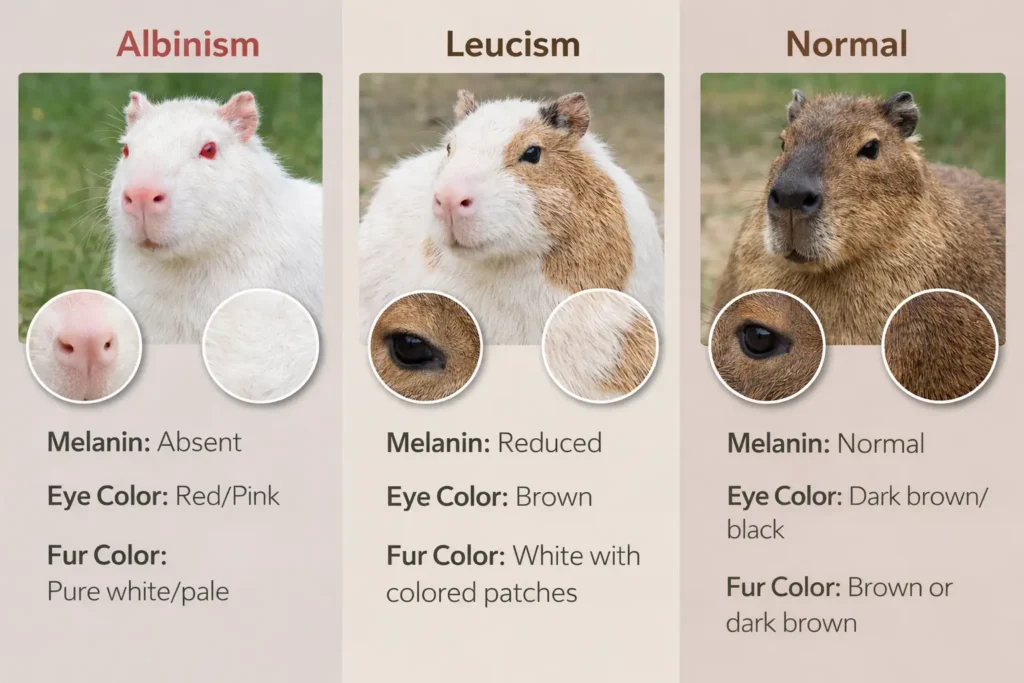
| Condition | Melanin Production | Eye Color | Coat Color/Pattern | Genetic Basis |
|---|---|---|---|---|
|
Albinism
|
Absent
|
Red/Pink
|
Pure white/pale
|
Mutation in genes responsible for melanin synthesis
|
|
Leucism
|
Reduced
|
Normal (blue/brown)
|
White or patchy white with normal-colored areas
|
Diverse genetic mutations affecting pigment cell migration/survival
|
|
Partial Albinism
|
Reduced/Localized
|
Normal
|
White patches/spots on otherwise normal coat
|
Specific genetic mutations affecting localized pigmentation |
The Rarity and Life of Albino Capybaras in the Wild
Occurrence in world:
In the wildlife, there is only 1 albino capybara out of 100000 births while in captivity life like zoos or breeding programs there rate of birth may be slightly higher but they are still uncommon. These beautiful creatures among rodents are more sensitive and are rarely born that raise human curiosity. Regarding this fact, we should follow the guidelines of the wildlife care department while interacting with them. Albino capybaras serve as a reminder of nature’s remarkable diversity. Their existence encourages conservation efforts and educates the public about genetic variations.
Challenges and Vulnerability in the Wild:
Albino capybaras face unique hardships in their natural environments due to their genetic condition. While beautiful and rare, their survival is significantly challenged by factors that don’t affect normally pigmented capybaras.
Increased Predation Risk
Capybara depends upon blurring the surroundings as a primary defense but with the unique body color already reduces this functionality. Result is that they are easy options for predators like jaguars and alligators
Sun Sensitivity & Overheating
They typically live in hot, humid environments where sun exposure is intense. Without melanin to absorb UV rays, their skin cells are easily damaged, which may also increase the risk of skin cancer.
Vision Affect:
Albinism causes eye development issues and with this they face issues like blurred vision and it could be hard to identify the predators and food for them .Impair their ability to navigate terrain or water safely
Albino Capybaras Matter for the Species
Capybaras as a species are currently listed as “Least Concern” by the IUCN — they are widespread and not endangered.However, albino capybaras are so rare that they do not significantly affect the species’ overall conservation status. Their survival is more of an individual welfare issue than a population concern. For more information National Geographic is a reputable source.
Specific Health and Care for Albino Capybaras
Sun Sensitivity:
They are the most sensitive rodents and need special treatments in all aspects. Lack of melanin can lead to skin cancer and sunburn. For this prioritize Uv protection and provide them the shades or green land where they can survived, moreover, consider vet-approved animal sunscreens
Vision Impairment:
Albino capybara have light sensitivity issues typically you can say photophobia, they also face involuntary eye movement. That leads to visual issues like blur effects.
Expert tip: make sure to look up the movement of albino capybara. Look at signs like bumping into things, hesitance to move, or confusion .
✅ Expert Tip:
Enrichment for Sensory Need
- Use scent trails, tactile paths, or auditory toys (e.g., wind chimes, bells)
Overall Health Monitoring
As we mentioned that Albino capybaras are sensitive and need more care than brown capybaras so you should look for Albino capybaras veterinary oversight than typical capybaras.
Habitat Needs & Importance:
Albino capybaras have low pigmentation and need special protection from the Sun. They need special shades or green land. Make sure at least you have indoor shades. They gradually heated due to sensitive skin, for this provides them a small pond or area where they can play in water and can cool down the temperature
Diet plans for Albino Capybaras:
Typical capybaras eat grass , plants and green leafs and need access to water all the time but if you think due to albinism this capybara needs some special food then you think wrong. You just need to take care of nutrients like vitamin D to boost them. Here is the checklist to take care of Albino Capybara routine:
Summary Checklist for Albino Capybara Care
| Area | Needs |
|---|---|
|
UV Protection
|
Shade, vet-safe sunscreen, indoor access during peak sun
|
|
Vision Support
|
Predictable layout, non-sharp obstacles, sensory-based enrichment
|
|
Vet Care
|
Regular exotic vet visits, monitor for skin/eye/behavioral issues
|
|
Water Access
|
Essential for cooling and comfort
|
|
Nutrition
|
High-fiber, balanced diet — same as regular capybaras
|
|
Enclosure Design
|
Natural cover + water features + secure fencing
|
Debunking Myths and Expert Insights
Albino capybara have genetic changes and people consider them as a disorder. Here is the guide regarding all the misconception
- Albino animals are sickly or cursed.
- Albino animals are a different species.
- All white animals are albino.
- Albino animals are blind.
- Albinism always affects behavior.
- Albinism is a genetic mutation, not a curse or illness. Health issues related to melanin deficiency, not overall weakness.
- They are the same species, just with a different genetic expression affecting pigmentation.
- Not true. White fur ≠ albinism. Some animals have leucism or natural white color phases.
- They may have reduced vision, but most are not completely blind. Many adapt well, especially in captivity.
- Not necessarily. Albino animals can behave just like others of their species unless sensory issues interfere.
Ask The Expert?
Do albino capybaras live as long as typical capybaras?
While albinism itself isn’t a disease, the associated health challenges (sunburn, vision impairment) can reduce lifespan, especially in the wild. With proper care in captivity, they can thrive.
Are they more susceptible to other diseases?
Generally, no, but their compromised defenses (skin, eyes) can lead to secondary issues if not managed.
Can I ethically own an albino capybara?
Ethical Sourcing/Adoption: Seek reputable rescues or breeders who prioritize animal welfare and genetic health. Emphasize extensive research into their complex care needs and local legality.
Conclusion
Albino capybara is not a separate species but a rare genetic presence lacking melanin. This unique biology gives them their distinctive white fur, red or pink eyes, and heightened sensitivity to light and heat. Due to these differences, they require specialized care—including UV protection, visual support, and regular veterinary monitoring.
While albino capybara is a rare mammal it’s our responsibility to approach them with Ethical responsibility and accurate information, so we take better care of these kind of species
This content is based on verified scientific sources, veterinary guidelines, and real-world care expertise.We are committed to regularly updating this guide with the latest research, field insights, and best practices in exotic animal care and welfare.
Frequently Asked Questions
What is an albino capybara?
An albino capybara is a rare capybara born with albinism, meaning it has no melanin, resulting in white fur and red or pinkish eyes.
How rare are albino capybaras?
Albino capybaras are extremely rare in the wild due to genetic conditions and survival challenges like camouflage loss.
Why are albino capybaras white?
They are white because albinism prevents the production of melanin, the pigment responsible for color in skin, fur, and eyes.
Do albino capybaras have health problems?
Yes, they may have weaker eyesight, sensitivity to sunlight, and higher risk of skin issues due to lack of pigment protection.
Where are albino capybaras found?
They are mostly found in South America, but sightings are very rare in natural habitats.
Are albino capybaras different in behavior?
No, their behavior is the same as normal capybaras—they are social, calm, and live in groups.
Can albino capybaras survive in the wild?
They have lower survival chances because their white color makes them easier for predators to spot.
Are albino capybaras kept in captivity?
Yes, some are kept in zoos or wildlife centers where they are protected and receive proper care.

Carly
Exotic Pet Research Specialist
Hi, I’m Carly, and I’m the heart behind CapybaraTalks.com. My journey with capybaras began when I met my first pet, and I was instantly fascinated by her calm, social, and endlessly curious nature. Capybaras are gentle, playful, and love to swim and explore—each one has a unique personality that makes them such special companions.